Getting your car from point A to point B successfully comes down to a few key, actionable decisions. The main choices you'll make revolve around the type of company you hire (carrier vs. broker), the kind of truck your car rides on (open vs. enclosed), and the pickup/delivery logistics. Each choice impacts the final cost, level of protection, and overall convenience, so understanding these variables is the first step to a smooth transport experience.
Understanding Your Car Shipping Options
Before you start gathering quotes, it's critical to understand the fundamental choices you'll face. These decisions directly shape your entire shipping experience, from the price you pay to the timeline for your car's arrival.
First, you need to decide whether to work directly with a carrier or engage a broker.
- Carriers are the companies that own the trucks and employ the drivers. They physically move your vehicle. The main advantage is direct communication, but the significant downside is their fixed routes and limited availability. You must conform to their schedule and service area.
- Brokers function as logistics specialists. They don't own trucks but maintain vast networks of pre-screened, licensed carriers. A reputable broker can source a driver for virtually any route, often securing a better price and faster pickup by making qualified carriers compete for your business.
For most shipping needs, working with an experienced broker provides the flexibility and network access necessary for an efficient and timely transport.
Open vs. Enclosed Transport: The Core Decision
This is the most significant decision you'll make, balancing your vehicle's value against your budget.
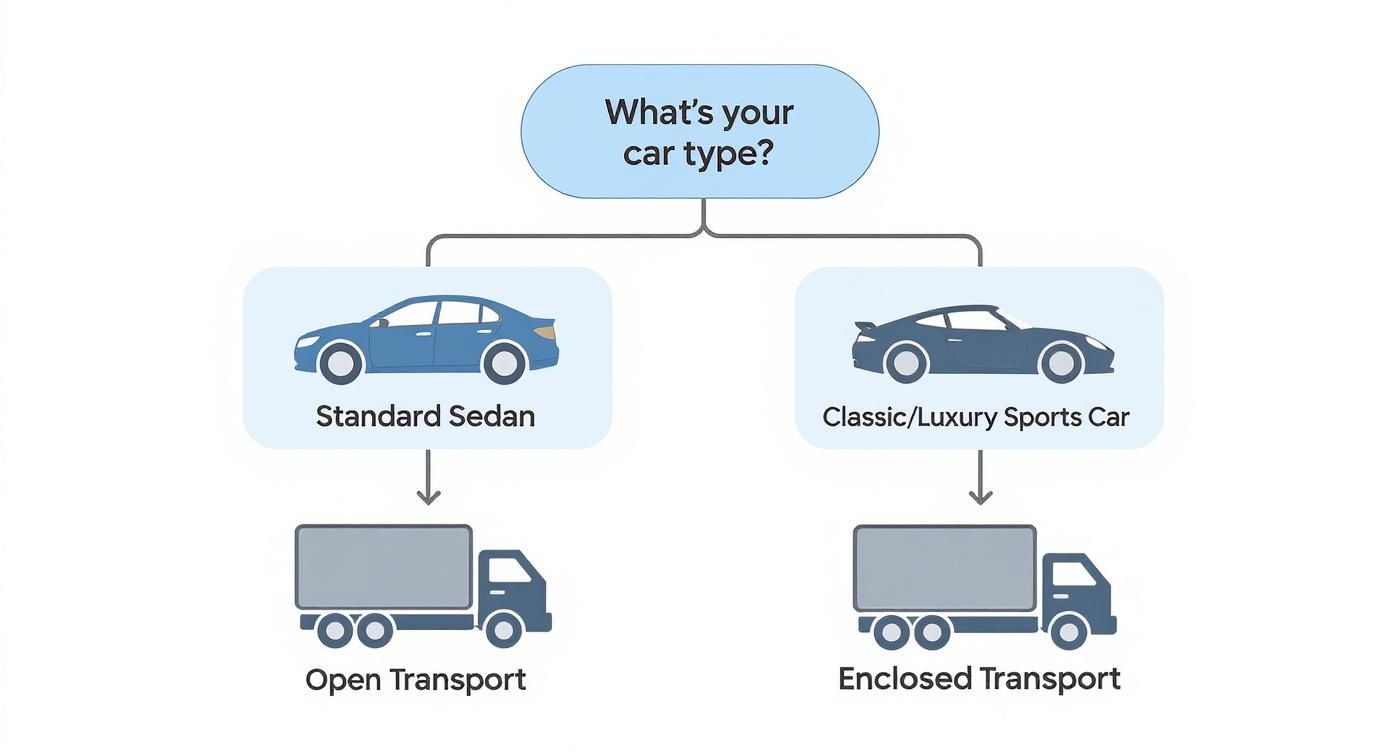
Open transport is the industry standard you see on highways daily—long, double-decker trucks with vehicles exposed to the elements. Its popularity is driven by efficiency and cost-effectiveness. Because drivers can load more cars onto a single trailer, the cost per vehicle is significantly lower.
This is the most practical and common method for shipping standard vehicles. In an analysis of over 5,400 recent shipments, 75.6% were standard cars like Toyotas and Fords, underscoring its role as the go-to solution.
When To Choose Enclosed Transport
Conversely, enclosed transport offers a premium, white-glove service for your vehicle. The car travels inside a fully covered, hard-sided or soft-sided trailer, completely shielded from rain, snow, road debris, and sun exposure.
The higher cost is justified in specific scenarios:
- Classic or Antique Cars: A '67 Mustang or vintage Porsche is irreplaceable. Enclosed transport eliminates the risk of rock chips, hail, or other road hazards.
- Luxury and Exotic Vehicles: For high-value cars like a Ferrari, Bentley, or a high-end EV, the added protection provides essential peace of mind.
- Show Cars: If a vehicle must arrive in pristine, showroom-ready condition, enclosed transport is the only viable option.
Open vs Enclosed Transport at a Glance
This direct comparison will help clarify which option aligns with your specific needs and budget.
| Feature | Open Carrier Transport | Enclosed Carrier Transport |
|---|---|---|
| Cost | Lower cost; the industry standard | 30% – 60% more expensive |
| Protection | Exposed to weather & road debris | Fully protected from all elements |
| Best For | Standard vehicles, daily drivers | Classic, luxury, exotic, show cars |
| Availability | High; more trucks and routes | Lower; fewer carriers, may take longer |
Ultimately, choosing between open transport car shipping and enclosed comes down to a calculated balance of cost versus risk.
Key Takeaway: Here’s a practical rule of thumb: If the cost to repair a single scratch, ding, or hail dent would cause significant financial strain or devalue the vehicle, the premium for an enclosed carrier is a worthwhile investment.
How Car Shipping Costs Are Calculated
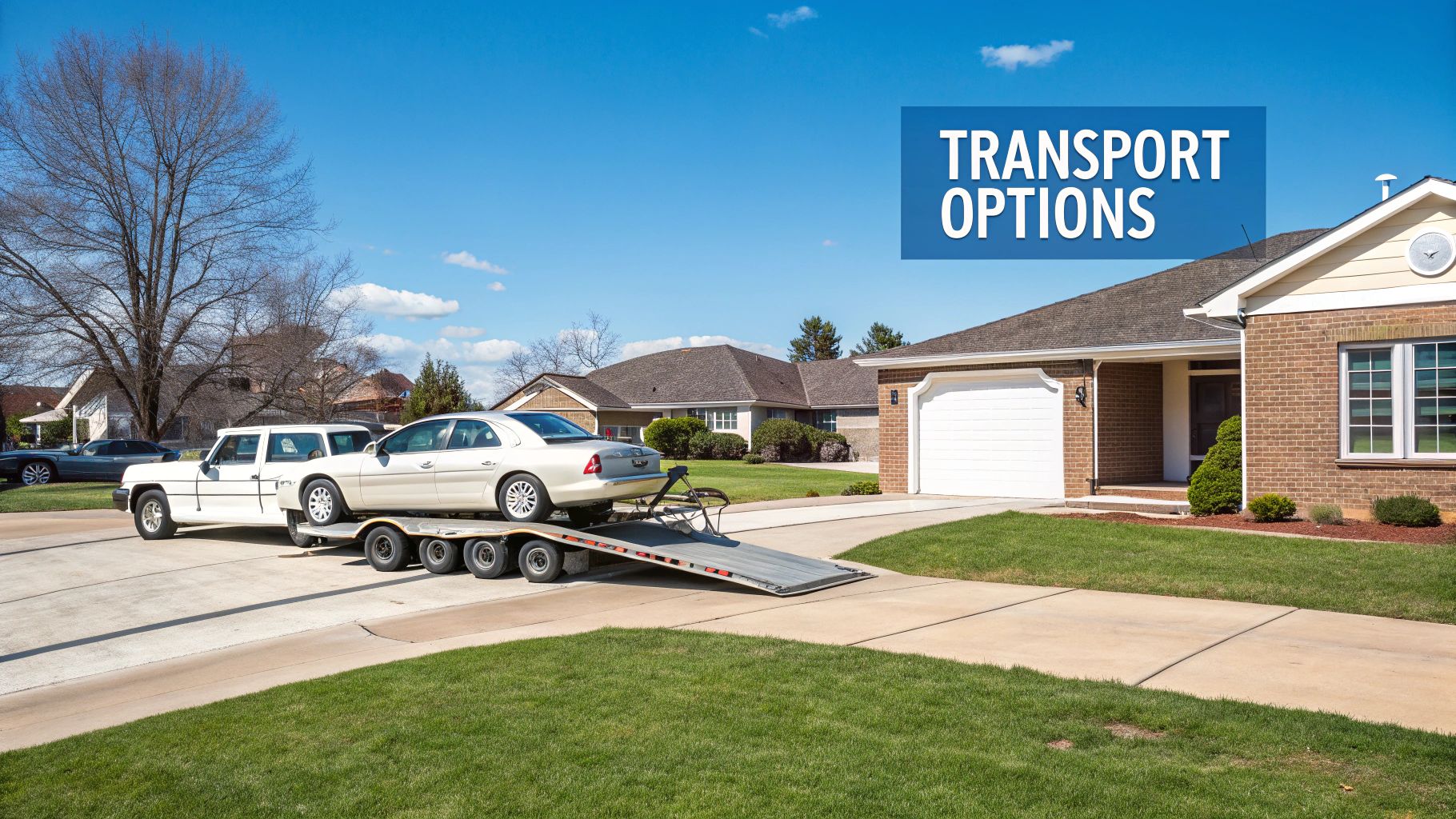
The quote you receive for shipping your car isn't arbitrary; it’s a detailed calculation based on several operational factors that directly impact the carrier's costs.
The primary driver of cost is distance. A cross-country shipment from Miami to Seattle requires significantly more fuel, driver hours, and equipment wear than a regional move from Atlanta to Nashville. These logistical costs are directly reflected in your final price.
The type of vehicle is the next major factor. A standard Honda Civic has predictable dimensions and weight. In contrast, a lifted Ford F-250 or a large SUV like a Cadillac Escalade is heavier and occupies more space on the trailer, reducing the total number of vehicles the carrier can haul. This lost capacity is factored into the price, making larger vehicles more expensive to ship.
Primary Cost Factors You Control
Beyond the basics, your choices directly influence the quote you receive.
- Open vs. Enclosed Transport: This is a major cost variable. Opting for an enclosed carrier for maximum protection will increase your cost by 30% to 60% compared to a standard open trailer.
- Pickup and Delivery Locations: Carriers operate most efficiently on routes between major metropolitan areas. A trip from Los Angeles to Dallas is straightforward due to high volume. However, if your pickup is in a remote, rural town, the driver must deviate from their primary route, consuming extra time and fuel. This "deadhead" mileage will be added to your bill.
Pro Tip: If you live in a remote area, ask your transport coordinator if meeting the driver in a larger nearby city or at a truck stop along a major highway can reduce your cost. A 30-minute drive can sometimes save you $50-$100 by eliminating difficult last-mile logistics for the driver.
Hidden Variables That Influence Price
Several other factors can also affect your final quote.
The operability of your vehicle is a key detail. A non-running vehicle cannot be driven onto the trailer. The driver must use a winch and expend extra effort to load and unload it, which invariably incurs a non-operational vehicle fee.
Seasonality also plays a significant role. "Snowbird season" (fall and spring) sees a massive migration of vehicles between northern states and sunbelt destinations like Florida and Arizona. This surge in demand on specific routes drives prices up. Our guide on how much it costs to ship a car to Florida provides a detailed breakdown of these seasonal fluctuations.
Broader market trends also impact pricing. For instance, a projected 3-4% drop in global auto sales for 2025 is shifting logistics from large-scale new car shipments to more individualized transports of used and electric vehicles. You can read more about these global auto market shifts on tciships.com to understand how macro trends affect your shipment.
Finally, fuel prices are a constant variable. When diesel costs rise, carriers pass this expense on through a fuel surcharge. This is why quotes are typically valid for a limited time—usually 7-14 days. Understanding these factors gives you a clear picture of what you're paying for.
Getting Your Car Ready for Transport
Properly preparing your car for shipment is the single most effective action you can take to ensure a smooth, damage-free process. These steps are not just for the vehicle's protection; they streamline the entire operation for both you and the driver.
The first step is to thoroughly wash your car's exterior. A clean vehicle allows for a precise pre-shipment inspection. Every existing ding, scratch, and scuff becomes clearly visible, which is essential for accurate documentation on the condition report.
Document Everything Before It Leaves
With the car clean, your next task is to create a detailed, time-stamped visual record of its condition. Use your smartphone to take clear photos from every angle: front, back, both sides, and all four corners. Zoom in on any pre-existing damage, such as paint chips, dings, or bumper scuffs.
For comprehensive protection, also take a slow, continuous video walking around the vehicle. Inside the car, film the interior and capture a clear shot of the odometer reading. This digital evidence is your indisputable proof of the car's condition at the moment of pickup.
Expert Insight: In the rare event of a damage claim, this visual proof is non-negotiable. A clear, dated photo of a flawless bumper is infinitely more effective than relying on memory. This 10-minute task can prevent significant financial loss and disputes.
Preparing the Vehicle for the Journey
With documentation complete, prepare the car for transport. The goals are to reduce weight, eliminate safety hazards, and facilitate easy handling by the driver.
- Remove All Personal Items: This is a non-negotiable industry rule. Auto transport carriers are not licensed to transport household goods, and their cargo insurance does not cover personal belongings. Laptops, clothing, or other valuables left in the car are at risk of loss or damage with no recourse for a claim.
- Keep Fuel at a Quarter Tank: A full tank of gasoline adds significant weight (approx. 6 pounds per gallon). Across a full load of 10 vehicles, this extra weight can become a safety and compliance issue. A quarter tank is sufficient for loading, unloading, and transport.
- Secure or Remove Loose Parts: Inspect any aftermarket accessories. A custom spoiler, removable roof rack, or non-retractable antenna should be secured tightly or removed entirely. These items are susceptible to damage from wind and vibration during transit.
Use this checklist to ensure all preparation steps are completed.
Vehicle Pre-Shipment Checklist
Follow this checklist to ensure your car is perfectly prepared for pickup and a smooth transport.
| Task | Why It's Important | Status |
|---|---|---|
| Clean the Exterior | Allows for an accurate and fair vehicle inspection. | |
| Take Photos/Video | Creates a personal record of pre-existing condition. | |
| Remove Personal Items | They are not insured and are at risk of being lost or stolen. | |
| Reduce Fuel Level | Decreases the vehicle's weight for safer transport. | |
| Secure Loose Parts | Prevents damage to custom spoilers, racks, or antennas. |
Finally, address two crucial details. First, disable your car alarm to prevent it from activating during transit, which can drain the battery and be a major nuisance for the driver. Second, prepare a spare key to give to the driver. They need it to move the vehicle on and off the trailer.
Once these steps are complete, you can confidently hand over your vehicle, knowing you have done your part to ensure a safe journey.
Getting the Paperwork in Order and Checking Insurance
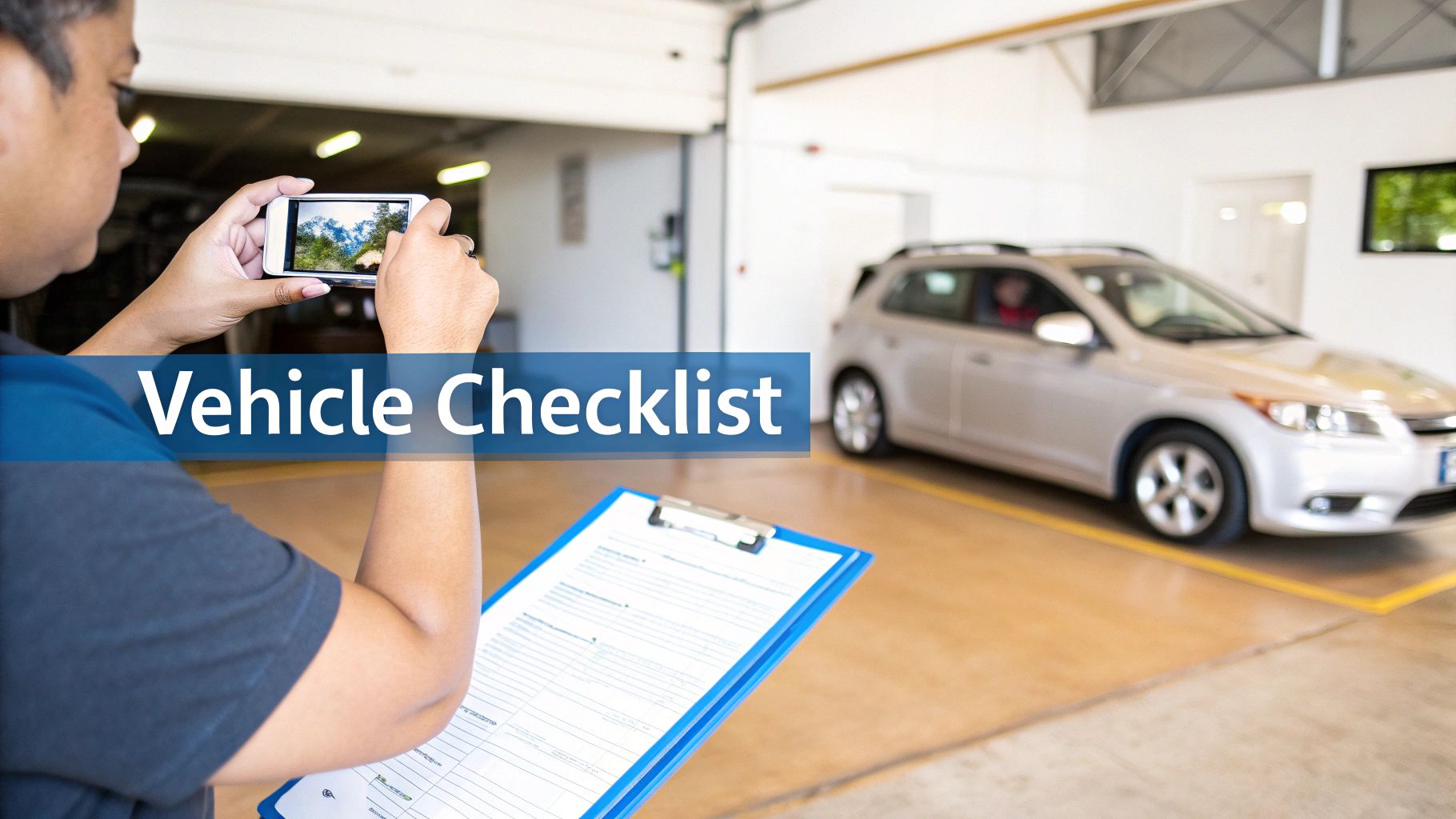
While paperwork is never exciting, understanding a few key documents is essential for protecting your vehicle and your financial interests during shipment.
The most critical document is the Bill of Lading (BOL). This is not just a receipt; it is your legally binding contract with the carrier. The BOL serves as the shipping agreement, a detailed vehicle condition report, and your proof of delivery. At pickup, you and the driver will inspect the vehicle together, noting every pre-existing flaw on the BOL's diagram. Do not sign it until you are completely satisfied with its accuracy.
Demystifying Insurance Coverage
Insurance is a common source of confusion. By federal law, all licensed auto carriers must maintain cargo insurance to cover damage caused by their negligence during transit.
However, it is crucial to understand the limitations of this coverage. The carrier's policy is designed to cover incidents like a traffic accident or equipment failure. It typically does not cover:
- Personal Belongings: Items left inside your vehicle are not covered.
- "Acts of God": Damage from unforeseen events like hailstorms or floods is usually excluded.
- Pre-existing Damage: Any damage documented on the Bill of Lading at pickup is not covered.
Before pickup, request a copy of the carrier's insurance certificate. This document verifies that their coverage is active and specifies the policy limits. While major incidents are rare, being prepared for complex situations is wise; you may need to learn about processes like understanding document notarization after car accidents if a significant event occurs.
Crucial Takeaway: Never surrender your keys without receiving a signed copy of the Bill of Lading. This document, with its detailed condition report, is your most vital piece of evidence for filing a damage claim.
Shipping a Car Internationally or to Alaska and Hawaii
For overseas shipments, the documentation requirements become more complex, involving customs, ports, and maritime law.
In addition to the BOL, you will need to provide:
- Original Vehicle Title: The title must be clean and free of liens. If there is an outstanding loan, you must provide a notarized letter from the lienholder authorizing the export.
- Photo ID: A valid driver's license or passport is required.
- Customs Forms: Your shipping provider will guide you through the necessary customs declarations.
The international shipping landscape is also evolving, with U.S. exports of electric vehicles jumping over 300% in one year. EVs are subject to strict safety protocols, such as the International Maritime Dangerous Goods (IMDG) codes, which regulate battery transport. Ensuring all your documents are in order from the outset is key to a successful international shipment.
What to Expect on Pickup and Delivery Day
Knowing the logistical flow of pickup and delivery day can eliminate stress and ensure a smooth handover. Here’s a step-by-step guide to the process.
It begins with a phone call. Your transport company provides a pickup window, but the driver will call you 12 to 24 hours in advance to schedule a more precise time. Use this call to confirm the address and notify them of any potential access issues, such as narrow streets, low-hanging trees, or a steep driveway.
Coordinating the Pickup Location
Auto transport trucks are enormous, typically 75 to 80 feet long. They cannot navigate tight residential streets or cul-de-sacs.
If your location is inaccessible, the driver will work with you to arrange a convenient and safe meeting point. Common alternative locations include:
- Large retail parking lots (e.g., Walmart, Home Depot).
- Nearby commercial parks with wide roads.
- A truck stop or rest area along a major highway.
This flexibility is standard practice. Our guide on door-to-door auto transport explains in detail how drivers manage these logistics to get as close to your door as is safely possible.
The All-Important Vehicle Inspection
Once you meet the driver, the most critical step of the pickup begins: the joint inspection. You will walk around the vehicle together and document its exact condition on the Bill of Lading (BOL). This is where your preparation—washing the car and taking photos—pays off.
Be meticulous. Point out every pre-existing flaw, no matter how minor. A small scratch on the door or a scuff on the bumper must be noted on the BOL's vehicle diagram. Your sole responsibility is to ensure this report is 100% accurate before you sign.
Crucial Tip: Do not allow yourself to be rushed during the inspection. The signed BOL is the official record establishing the vehicle's pre-shipment condition. A thorough inspection is your primary protection against future disputes.
After signing, the driver will provide you with a copy of the BOL. You can then watch as they load your car, and it officially begins its journey.
The Delivery and Final Inspection Process
Upon arrival at the destination, you will repeat the inspection process in reverse. This time, your objective is to identify any new damage that may have occurred during transit.
Before signing any delivery paperwork or making the final payment, conduct a thorough walk-around. Use your copy of the pickup BOL and your own photos as a reference. Inspect every panel, the glass, and the roof. If possible, perform the inspection in bright daylight to easily spot any new dings or scratches.
If you discover new damage, you must note it on the BOL before signing. This is non-negotiable. Clearly describe the damage on the document in the driver's presence. Signing the form without any notations legally confirms you have accepted the vehicle in its current condition, making a subsequent insurance claim nearly impossible to win. The documented BOL is the essential evidence needed for any claim.
Common Car Shipping Questions Answered
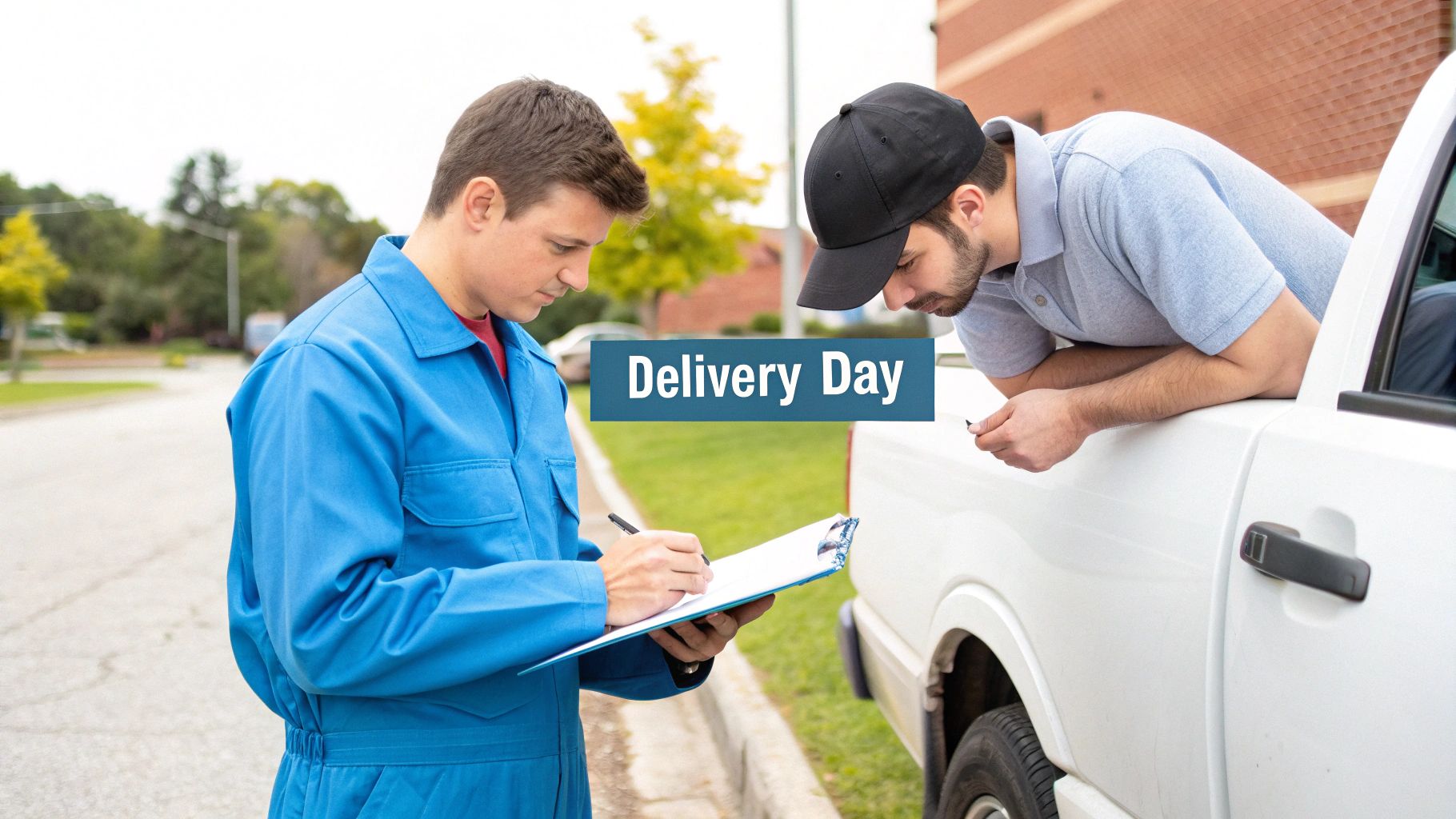
Even with careful planning, questions often arise. Here are clear, direct answers to the most common inquiries to help you finalize your shipping arrangements with confidence.
How Long Does It Take to Ship a Car?
Transit time is primarily determined by distance. For a regional move, such as Atlanta to Miami, you can expect a delivery timeline of 2 to 4 days.
A cross-country shipment from New York to Los Angeles is a major logistical operation and will typically take between 7 and 10 days.
It is important to distinguish between the "pickup window" (the timeframe for the driver's arrival) and the "transit time" (the duration the car is on the truck). Always incorporate a buffer into your schedule, as unforeseen weather, traffic, or mechanical issues can cause minor delays.
Can I Pack Personal Belongings in My Car?
The answer is a definitive no. Federal regulations and carrier insurance policies strictly prohibit the transport of personal items inside a shipped vehicle.
Here’s why this rule is enforced:
- No Insurance Coverage: Carrier cargo insurance covers the vehicle only, not its contents. Any personal items lost, damaged, or stolen during transit are not covered.
- Weight Limits: The Department of Transportation enforces strict weight limits on commercial trucks. Extra weight from personal belongings can lead to violations and substantial fines for the carrier.
- Driver Access & Safety: Drivers may need to move your vehicle to load or unload others. Boxes or other items can obstruct visibility and create safety hazards.
Some companies may permit a single suitcase or box in the trunk, typically under 100 pounds, but you must obtain explicit written approval beforehand. Do not assume it is allowed.
A Word of Caution: Attempting to hide items in your car is a significant risk. If discovered, you may face additional fees, be required to remove the items at your own expense, or have your shipment canceled entirely.
What if My Car Is Damaged During Transport?
While damage is rare, a clear procedure exists to address it. Your immediate action at the time of delivery is critical.
Thoroughly inspect your vehicle upon arrival and note any new damage directly on the Bill of Lading (BOL). This must be done before you sign the document and before the driver departs. The signed BOL with your notations is your official proof that the damage occurred while the vehicle was in the carrier's possession.
After documenting the issue on the BOL, take clear photos of the damage from multiple angles. Contact the transport company immediately to initiate the claims process. They will require a copy of the signed BOL and your photos to proceed.
How Do I Pay for Car Shipping Services?
The industry-standard payment structure is designed to be secure for both the customer and the company. You should not be required to pay the full amount upfront.
Payment is typically a two-step process. A small deposit or booking fee is paid to the broker via credit card when you schedule the shipment. This fee reserves your spot on a carrier's truck.
The remaining balance is due upon successful delivery and is paid directly to the driver. This final payment is almost always required in the form of cash or a cashier's check. Most drivers are not equipped to process credit cards. Having the correct form of payment ready ensures a smooth final handover and confirms you only pay in full once your car has been safely delivered.
Navigating the world of car shipping can be simple when you have the right partner. At We Will Transport It, we're committed to making your vehicle transport experience smooth and worry-free from start to finish. Get your free, no-obligation quote today and see how easy it can be.