Scissor Lift and Boom Lift Transportation: What Most Guides Get Wrong
Search for scissor lift transportation or boom lift transport and you will find the same article forty different times. Trailer type. Permits. Call now for a free quote. None of it tells you why an aerial lift is a different transport problem than an excavator, and none of it addresses the question that actually drives most of these shipments: how do you move a fleet of lifts on a schedule without one of them coming back damaged and costing you the rental deposit, the repair bill, and the next three jobs.
This guide covers both sides of that question. If you are a contractor moving one or two units between job sites, the first half is for you. If you manage a rental fleet moving units every week, the second half is where the real difference shows up. If your fleet also includes forklifts, our forklift transport guide covers the same level of detail for that equipment.
Why Scissor Lifts and Boom Lifts Transport Differently Than Other Heavy Equipment
Most heavy equipment transport content treats every machine the same: get the dimensions, pick a trailer, secure the load. Aerial lifts break that pattern in three ways.
- They are top heavy when not fully lowered. A scissor lift with the platform even partially raised has a completely different center of gravity than one collapsed flat. Drivers and loaders who do not work with aerial equipment regularly sometimes miss this.
- They carry sensitive hydraulic and electronic components. Tilt sensors, hydraulic lines, and control modules on modern lifts are more exposed to transit damage than the structural frame of an excavator. Rough tie-down or improper securement can damage components that do not show visible exterior signs.
- Boom lifts have a swing radius problem flatbeds were not designed around. An articulating boom folded for transport still has a long reach arm that needs specific blocking to prevent shifting, and the boom itself is often the most expensive single component on the machine.
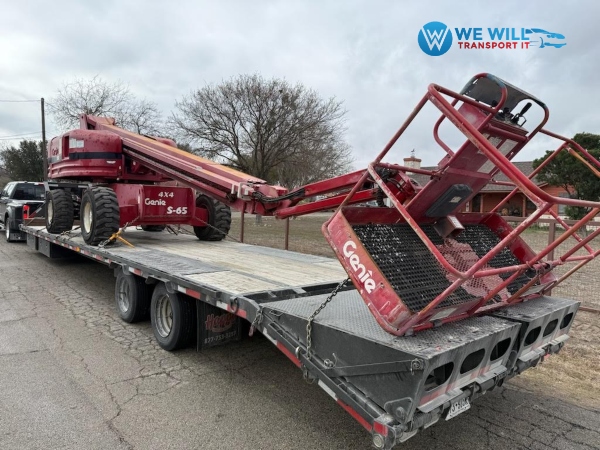
A scissor lift and an excavator might weigh about the same. They do not load, secure, or ride the same way. Treat them differently and the claim rate drops.
For Contractors: Moving One or Two Units Between Job Sites
If you own or lease a lift and need it at a different site, the process is straightforward once you know what to confirm before the truck shows up.
Know Which Trailer Your Lift Actually Needs
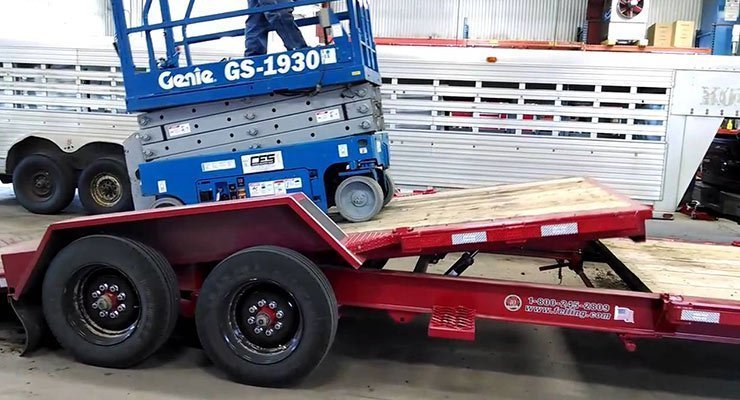
Most electric scissor lifts under 6,000 pounds ship fine on a standard flatbed or step deck. Rough terrain scissor lifts and most boom lifts run heavier and taller, and frequently need a step deck or RGN to stay under the 13 foot 6 inch legal height limit once loaded. Our team breaks down trailer matching for scissor lifts and boom lifts on a unit by unit basis so you are not guessing.
Telescopic boom lifts over 60 feet of reach are often the exception that needs a double drop trailer specifically because of arm length and ground clearance during loading. Confirm this with your carrier before the day of pickup, not after the truck arrives and the lift will not clear the ramp angle.
Confirm the Lift Is Fully Lowered and Locked Before Pickup
This sounds obvious and gets skipped constantly. A platform left even a foot off the deck changes the load’s stability and can violate the carrier’s securement requirements. Lower it, engage any travel locks the manufacturer specifies, and confirm with whoever is on site that it stayed down overnight if the truck is arriving the next morning.
Document Condition Before It Leaves the Lot
Photograph all four sides, the platform, the boom or scissor arm, and any existing cosmetic damage before the carrier loads it. This is the single biggest factor in resolving a damage dispute quickly. Time stamped photos beat a verbal description every time a claim gets filed.
For Rental Fleet Operators: The Real Difference Is Volume and Liability
If you run a rental company moving lifts between branches, customer sites, and service centers every week, the math changes. A single damaged unit does not just cost a repair bill. It costs a rental day you cannot bill, a customer relationship if the unit was already committed to their job, and a liability question if the damage happened on a job site versus in transit. If your fleet also rotates other construction equipment between locations, the same volume principles below apply across your whole inventory, not just the lifts.
Standardize Your Pre-Transport Checklist Across Every Branch
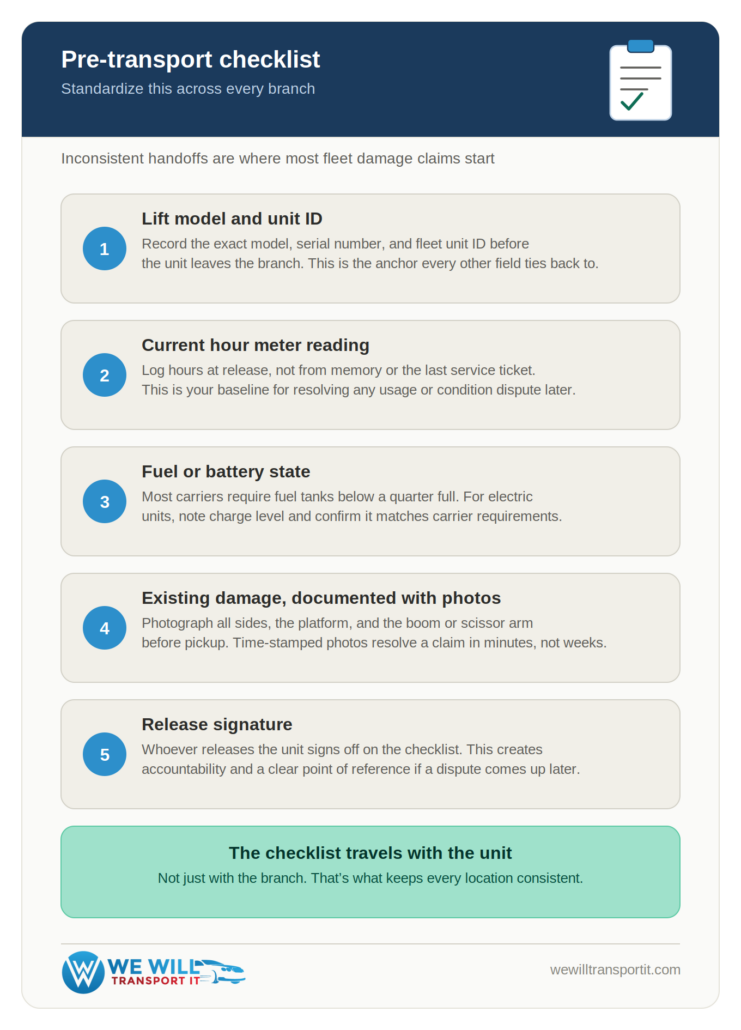
Inconsistent handoff procedures between branches are where most fleet damage claims originate. If one location lowers and locks every unit before transport and another does not, you will see the damage rate difference in your claims data within a quarter.
A standardized checklist that travels with the unit, not just with the branch, removes the variable. Include lift model, current hour meter reading, fuel or battery state, existing damage with photos, and a signature from whoever releases the unit for transport.
Negotiate Cargo Insurance Coverage That Matches Replacement Value, Not Book Value
Generic cargo insurance from a transport company often covers actual cash value, which on a five year old lift might be a fraction of what it costs you to replace it with a comparable unit at current prices. For a rental fleet moving units regularly, this gap adds up fast across dozens of shipments a year.
Ask your transport partner directly whether their policy covers replacement cost or depreciated value, and get the answer in writing before you sign an ongoing transport agreement.
Build a Repeat Carrier Relationship Instead of Spot Booking Every Move
Spot booking each transport with whatever carrier has the lowest quote that week means a different driver, different equipment familiarity, and different handling standards every time. Fleet operators who consolidate volume with one or two vetted carriers see fewer damage claims because the same crews become familiar with how that fleet’s specific lift models load and ride.
This also gives you leverage to negotiate volume pricing and priority scheduling during your peak rental season, which for most aerial fleets runs spring through early fall.
Track Transport Damage Separately From Job Site Damage
If your fleet management system lumps all damage into one category, you cannot tell whether your transport carrier is the problem or your renters are. Separate the two. If transport related claims cluster around a specific carrier, route, or driver, that is a data point worth acting on before it becomes a pattern across the whole fleet.
Permits and Regulations You Should Actually Know
Most scissor lifts fall under standard legal weight and height limits and do not require special permits for in-state moves. Where this changes:
- Rough terrain scissor lifts and large boom lifts often exceed 8 feet 6 inches in width once mirrors, outriggers, or platform rails are accounted for, which triggers oversize permit requirements in most states
- Telescopic boom lifts with reach over 80 feet frequently require escort vehicles for interstate moves due to length
- Crossing state lines with an oversize unit means permits from every state on the route, not just the origin and destination
A transport company that handles aerial equipment regularly will know these thresholds without being told. If you have to explain oversize permit basics to your carrier, that is a sign to find a different carrier.
Get a Quote Built for Aerial Equipment, Not a Generic Heavy Haul Quote
We Will Transport It moves scissor lifts and boom lifts for contractors and rental fleets across all 48 contiguous states. Our carriers know the difference between loading an excavator and loading a lift that needs to stay lowered, locked, and properly blocked for the entire trip.
Whether you need a single unit moved to your next job site or a standing transport arrangement for a rental fleet moving units every week, get a quote at wewilltransportit.com/heavy-equipment-transport and tell us your equipment specs and schedule. We will tell you exactly what trailer and timeline the job actually needs.