Jacksonville, Florida Heavy Equipment Transport
We Will Transport It has been moving heavy equipment in and out of Jacksonville, Florida for over 15 years. We know this city: the bridge weight restrictions on the St. Johns crossings, the JAXPORT terminal access protocols at Blount Island and Dames Point, the permit windows for oversized loads on I-95 and I-10, and the surface street realities of getting equipment into active downtown job sites without costing a contractor half a day in delays. We are fully insured, fully permitted, and built for loads of every size, from a single skid steer to a multi-piece construction spread, with no surprises from pickup to delivery.
Shipping heavy equipment to or from Jacksonville, FL
Jacksonville is a serious freight city. JAXPORT (the Jacksonville Port Authority) handles more automobiles than any other port in the United States, and its container and bulk cargo volume makes it one of the most active logistics hubs on the East Coast. I-95 and I-10 intersect here, making Jacksonville the gateway between the Southeast and everywhere else. Moving heavy equipment in and out of this market requires a hauler who understands Florida DOT permit requirements, St. Johns River bridge restrictions, and the logistics of serving a city where your load may need to cross water to get where it’s going.
Jacksonville, Florida Heavy Equipment Transport
Jacksonville is in one of the largest construction surges in its modern history. The city’s Downtown Investment Authority tracks more than $8.8 billion in active, approved, and proposed projects reshaping the urban core, and the machinery demand those projects generate is constant.
The most visible is the EverBank Stadium renovation: a $1.4 billion overhaul of the Jacksonville Jaguars’ home field that the team is calling the “Stadium of the Future.” The project is targeting completion in August 2028, with work ongoing through 2026 and 2027. Just steps away, Gateway Jax has broken ground on Pearl Square, a $2 billion, nine-block mixed-use redevelopment in the North Core neighborhood that will ultimately deliver more than 1,250 residential units, approximately 200,000 square feet of retail, a boutique hotel, and new public plazas across a walkable street grid. The first building at 515 Pearl broke ground in October 2024, followed by the second building at 425 Beaver Street in May 2025, with additional phases continuing through 2026 and beyond.
Alongside those headline projects, the Four Seasons Hotel and Residences is rising on the Northbank of the St. Johns River, the University of Florida is building a new graduate campus downtown, and Baptist Health is expanding its footprint in the urban core. When equipment needs to get to any of these sites, it moves through Jacksonville’s bridge network, and that is where route planning becomes critical.
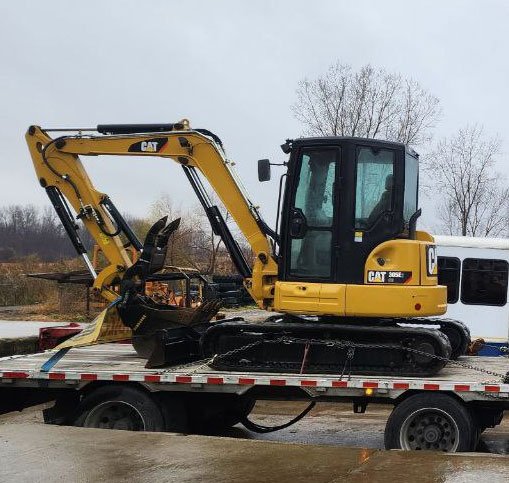
We Will Transport It handles every detail from permitting and routing to loading, securing, and final delivery, keeping you informed throughout.
Jacksonville’s Bridges: What Every Heavy Hauler Needs to Know
Jacksonville calls itself the City of Bridges, and for good reason. The St. Johns River runs directly through the downtown core, and crossing it with heavy equipment requires careful planning. Not every bridge in Jacksonville is built for the same load, and routing a heavy haul incorrectly can mean a permit violation, a damaged structure, or a load that simply cannot cross.
Here is what heavy equipment operators need to know about Jacksonville’s major river crossings:
Dames Point Bridge (Napoleon Bonaparte Broward Bridge) The longest cable-stayed bridge in Florida and one of the longest in the United States, the Dames Point Bridge spans approximately 11,000 feet with a main span of 1,200 feet and a clearance height of 175 feet. Carrying SR 9A traffic on the east side of the metro, Dames Point is the primary route for oversize loads moving to and from JAXPORT’s Blount Island and Dames Point marine terminals. The bridge accommodates standard legal loads and is the preferred crossing for heavy freight moving through the port corridor — but it requires active compliance with Florida’s axle weight and tandem-axle spacing rules, and overweight loads require FDOT permits in advance.
Acosta Bridge (St. Elmo W. Acosta Bridge) The six-lane Acosta Bridge connects the Southbank to Downtown Jacksonville and carries the Jacksonville Skyway tram on a center track. Built in 1991, it sees approximately 33,000 vehicles per day. It is a workable crossing for legal-weight heavy equipment loads, but its urban downtown position means access to adjacent job sites — including the Pearl Square construction zone and EverBank Stadium — requires careful coordination with local traffic management.
Main Street Bridge (John T. Alsop Jr. Bridge / “The Blue Bridge”) Opened in 1941, the Main Street Bridge is the only remaining movable lift bridge carrying automobile traffic across the St. Johns River in the Jacksonville area. It carries four lanes of US 1/US 90 traffic and remains one of the most recognizable landmarks in the downtown skyline. In January 2026, Jacksonville City Council unanimously approved nominating it for the National Register of Historic Places, with FDOT renovations planned to begin after July 1, 2027. The Main Street Bridge’s age and movable-span design make it a weight-sensitive crossing. Oversize and overweight loads should not use this bridge without specific FDOT permit authorization. Plan routes accordingly.
Hart Bridge (“The Green Monster”) The Hart Bridge carries US 1 and State Road 228 east-west, connecting Downtown to the Southside and Beach Boulevard corridor. Its elevated approach and structural design make it suitable for standard legal loads, but its high-profile position in Jacksonville’s skyline means wind exposure is a real factor for tall or wide loads crossing here.
I-95 Fuller Warren Bridge Built in 2002 and rated in good condition by the National Bridge Inventory, the Fuller Warren Bridge carries eight lanes of I-95 traffic and is the recommended interstate crossing for heavy equipment moves that need to stay on the highway system. At 1.5 miles long and federally maintained, it offers the most predictable clearances and weight compliance environment for oversize loads on permitted moves.
The bottom line: every heavy equipment move in Jacksonville requires a routing decision at the river. We Will Transport It plans those routes before the truck ever leaves the yard.
Heavy Haul Trucking from or to Jacksonville FL
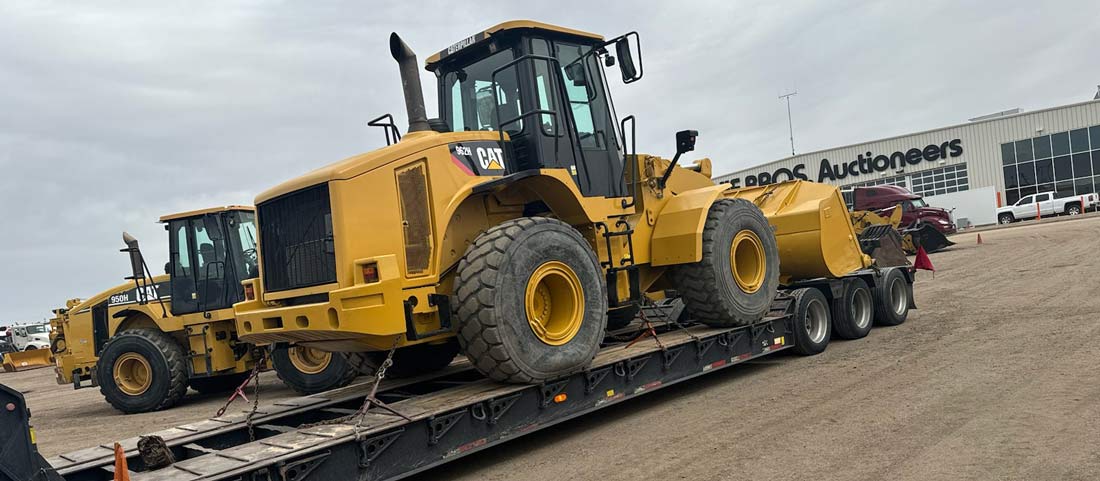
We provide heavy haul trucking services to Jacksonville, the Jacksonville Ports, and the Northeast Florida region. Hauling and Transporting heavy healer oversized equipment to or from Jacksonville and throughout Florida can be challenging. You need specialists who ensure your machinery arrives on time without delays or damage. We Will Transport It excels in heavy equipment shipping and handling your job with professionalism and care. If you’re in Jacksonville or places like Miami, Boston, Washington or Los Angeles, it’s important to get a price estimate from trusted shipping companies. Make sure to choose ones that guarantee their service and are dedicated to keeping their customers happy with great quality.
Trailers we use:
- Flatbed
- Hotshot
- RGN
- Step Deck
- Lowboys
Jacksonville Area Equipment Dealers:
- Beard Equipment Co.
6870 Philips Hwy, Jacksonville, FL 32216 (904) 296-5000
Third-generation authorized John Deere Construction and Forestry dealer serving Jacksonville for over 50 years. - Ag-Pro (Authorized John Deere Agricultural Dealer)
8711 Philips Hwy, Jacksonville, FL 32256 (904) 240-0475
Certified John Deere dealership, Jacksonville location serves landscapers, farmers, and grounds care operations. - Alta Equipment Company
(305) 477-2442
Full-service construction equipment dealer, specializing in aerial lifts, forklifts, and material handling equipment.
Florida Heavy Equipment Auction Houses:
- Ritchie Bros. Auctioneers
(863) 420-9919 - Tampa Machinery Auction Inc.
(813) 986-2485 - ASI 3 Auctions (Industrial & Commercial Equipment)
(813) 616-8567

How much does it cost to ship heavy equipment from Jacksonville, FL to Oklahoma City, OK?
The cost of shipping heavy equipment over 1,193 miles from Jacksonville, FL, to Oklahoma City, OK, is $4,175. The shipping cost depends on the distance and the weight of the equipment.
How much does it cost to ship heavy equipment from Jacksonville, FL to Indianapolis, IN?
The cost of transporting heavy equipment 880 miles from Jacksonville, FL, to Indianapolis, IN, is $3,080. Transport costs are determined by the distance traveled and the weight of the equipment.
How much does it cost to ship heavy machinery from Jacksonville, FL to Seattle, WA?
The cost of shipping heavy machinery 2,982 miles from Jacksonville, FL, to Seattle, WA, is $10,437. The price of shipping machinery is determined by the distance and weight.
How much does it cost to ship heavy machinery from Jacksonville, FL to San Francisco, CA?
The cost of hauling machinery from Jacksonville, FL, to San Francisco, CA, is $9,520 for distances over 2,720 miles. The shipping cost depends on the distance to be traveled and the weight of the machinery.
Default
Default
RV Manufacturers We Ship
We handle transport for towables and motorhomes from leading brands across the U.S.