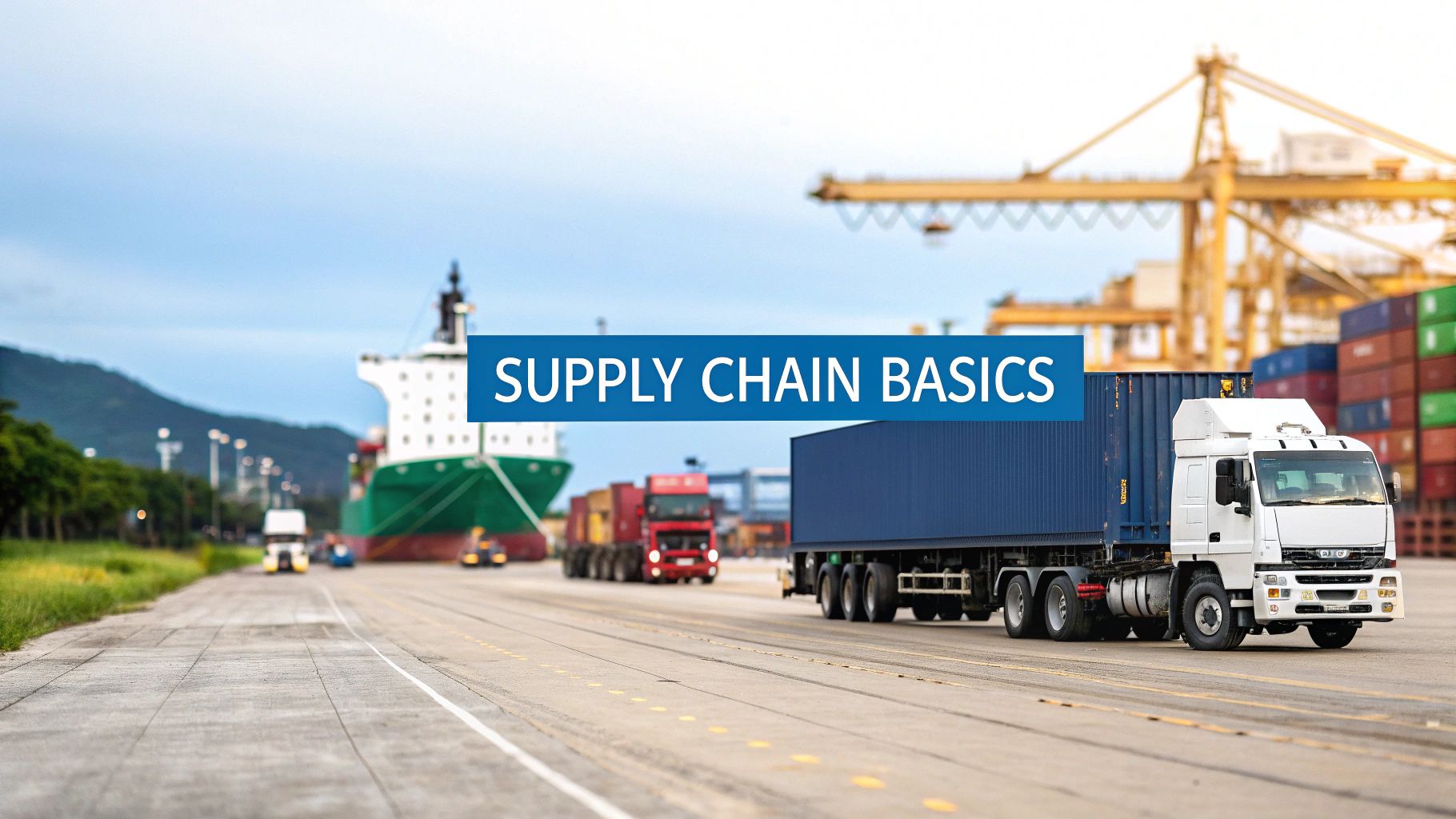
Supply chain management basics are simple in concept but complex in practice, especially when you're moving expensive assets like cars, boats, or heavy equipment. Think of it as choreographing a complex operation—every single person, vehicle, and communication must be perfectly timed and executed to get your asset from its origin to its destination safely and on schedule.
It’s the complete orchestration of the entire journey, and getting the transport piece right is non-negotiable.
1. Supply Chain Management Basics
Supply Chain Management, or SCM, is the strategic backbone of getting an item from where it is to where it needs to be. This isn't just about the physical move; it's about managing the flow of information, the people involved, and the finances tied to the project.
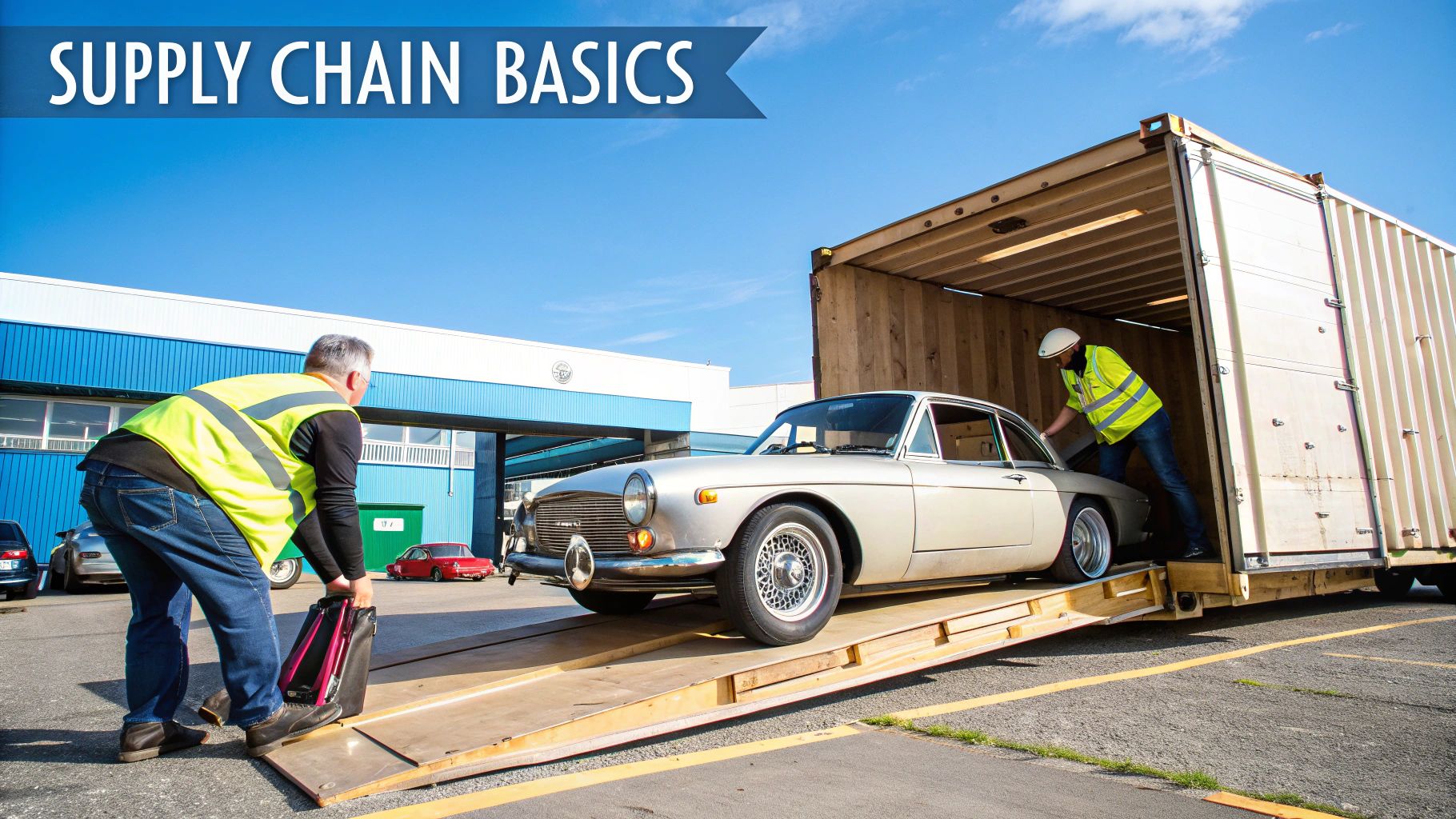
For high-value transportation, this process is absolutely critical. Imagine you’re shipping a $250,000 piece of construction equipment to a job site. An actionable SCM plan ensures the right lowboy trailer is booked, the permits for the route are secured, and the crane for unloading is scheduled to arrive at the exact right time. It’s not just a plan; it’s a series of coordinated actions.
It’s the thinking behind the moving. It’s the planning, executing, and monitoring that turns a potential logistical nightmare into a smooth, predictable process.
The Core Functions of SCM
At its heart, SCM is about making sure all the separate pieces of the transportation puzzle fit together perfectly. It’s a proactive approach, not a reactive one. This mindset applies to everything from legacy freight systems to modern logistics, where even things like drone operations management rely on the same core principles of planning and execution.
The table below breaks down the essential activities involved.
Core Functions of Transportation SCM
| Function | Description | Example in Vehicle Transport |
|---|---|---|
| Planning & Strategy | Developing the overall approach to meet delivery requirements efficiently. | Determining the best route for a cross-country car shipment to avoid bad weather and road closures. |
| Sourcing & Procurement | Selecting and vetting the right partners, carriers, and equipment for the job. | Choosing a fully insured, top-rated carrier that specializes in enclosed transport for a classic car. |
| Execution | The hands-on management of the physical transportation process. | Coordinating the pickup time with the seller and providing real-time tracking updates to the buyer. |
| Monitoring & Control | Tracking progress, managing risks, and ensuring compliance from start to finish. | Using GPS to monitor the truck’s location and communicating with the driver about any potential delays. |
Ultimately, a solid SCM strategy is what prevents those costly phone calls about delays, damages, or unexpected problems. It’s about controlling the journey so there are no surprises.
The 5 Core Stages of a Transport Supply Chain
To really get a handle on supply chain management, it helps to break it down into its essential parts. When we're talking about moving high-value assets like cars, boats, or heavy equipment, it's best to think in terms of five core stages: Planning, Sourcing, Preparing, Delivering, and Returning. Each stage is a critical step that builds on the one before it, creating a solid foundation for a successful transport operation.
Think of these stages as a clear roadmap. Once you understand them, you can build a transport process that's both efficient and tough enough to handle surprises.
This visual really brings it home, showing how each distinct phase is a piece of the puzzle. From the initial strategy to the final handshake, every part is connected, working together to create a seamless operation.
Planning and Sourcing
It all starts with Planning. This is your blueprint for success. Here, you're forecasting needs, mapping routes, and deciding on the right transport method. For a boat shipment, for instance, planning means choosing between hauling it overland on a custom trailer or scheduling it as deck cargo. An actionable tip: always have a backup route planned in case of unexpected road closures or restrictions.
Next is Sourcing, which is all about finding and vetting the right logistics partners. This isn't just about finding the cheapest quote. It’s about digging deeper—verifying insurance, checking safety records, and picking carriers who have proven experience moving your specific type of asset. This is where having a reliable partner network pays off.
The best supply chains aren't built on spreadsheets; they're built on strong relationships. Sourcing is less of a transaction and more about building a network of trusted experts who can execute your plan without a hitch.
Preparing, Delivering, and Returning
The third stage is Preparing. In manufacturing, this means building the product. In transport, it means getting the asset ready for a safe journey. This could be winterizing a boat's engine, securing loose parts on a combine harvester, or taking detailed photos of a classic car to document its pre-shipment condition.
Then comes the main event: Delivering. This is where the rubber meets the road. It covers everything from coordinating with the carrier and dispatching the truck to tracking the shipment in real-time and managing the final handoff. Good execution is what turns planning into a safe, on-time arrival. If you're curious about how this works for different kinds of cargo, you can dive into the details of freight shipping nationwide to see the delivery process up close.
Finally, we have Returning, or reverse logistics. This is your contingency plan for when things don't go perfectly. This stage covers what to do with a refused shipment, how to move equipment back after a job is done, or managing returns if something gets damaged. An actionable strategy here is to pre-negotiate return-trip rates with your carrier to avoid inflated costs on last-minute changes.
Actionable Logistics for High-Value Transport
Logistics is where the rubber literally meets the road. All the planning in the world means nothing until you start moving freight, and for high-value assets like vehicles, boats, and heavy machinery, getting the details right is everything. This isn't just about getting from Point A to Point B; it's about protecting the asset's value every single mile.
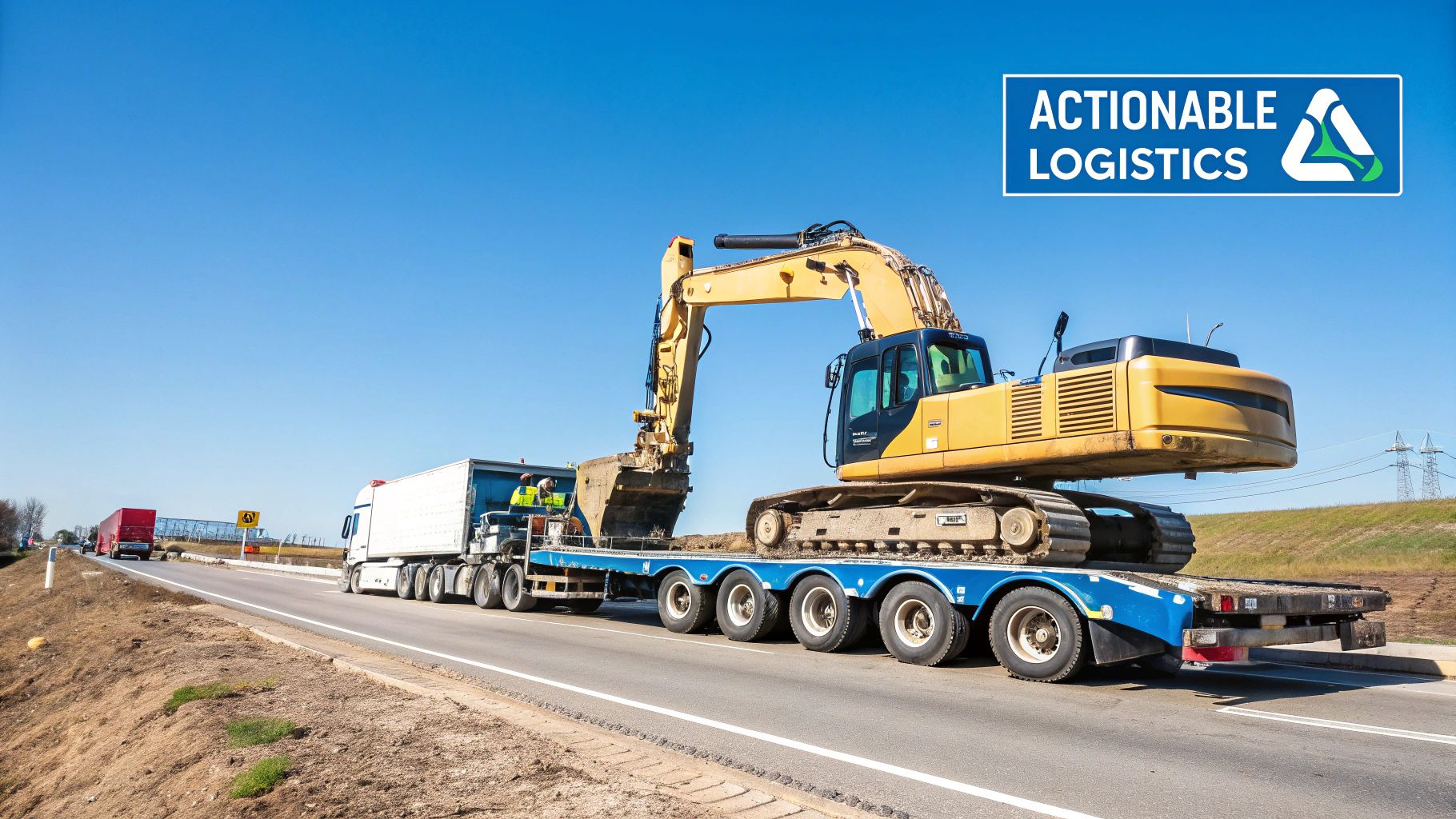
This means you have to get granular with transport specifics. For example, you wouldn't ship a classic car on an open carrier; you'd specify an enclosed trailer to protect it from weather and road debris. The same logic applies to heavy equipment. You can’t just guess which trailer works for an oversized excavator; you need the correct multi-axle flatbed to handle the weight and dimensions safely and legally. The machine dictates the equipment, which is why specialized options for heavy equipment transport are so critical.
Navigating the Paperwork
Getting the physical equipment right is only half the battle. The administrative side—the paperwork—is just as critical. One wrong document can bring a high-stakes shipment to a grinding halt.
Here's an actionable checklist for your transport documents:
- Freight Classifications: Correctly classify your cargo to avoid surprise fees. Double-check the National Motor Freight Classification (NMFC) number before booking.
- Bills of Lading (BOL): This is your legal contract. Before signing, verify every detail: addresses, cargo description, piece count, and declared value. Inaccuracies can void insurance claims.
- State-Specific Permits: For oversized loads, map the entire route and secure permits for every state you will pass through. Don't assume requirements are the same; they vary significantly.
A small oversight, like incorrect insurance coverage or poor port coordination, can quickly escalate into a significant financial loss. A well-executed logistics plan, however, ensures predictable, safe, and on-time delivery every time.
This meticulous attention to detail is becoming even more critical. The industry is bracing for growth, with the 2025 State of the Supply Chain survey showing that 69.73% of professionals expect shipping volumes to increase. As companies adapt with new regional hubs and nearshoring strategies, solid logistics are what will keep everything moving smoothly.
How Technology Is Changing the Game in Equipment Transport
In today's logistics world, data is as critical as the diesel that fuels the trucks. Technology provides the visibility and control needed to navigate the complex journey of shipping high-value equipment, turning a plan into a successful delivery.
This shift is driven by a real need for efficiency. By 2025, a staggering 82% of supply chain organizations had already boosted their IT spending, and 74% of executives planned to invest more in automation and IoT. This isn't about chasing trends; it's a smart move to fill talent gaps and keep operations running smoothly.
Key Technologies for Actionable Insight
The real magic happens when you use specific tools to gain control over your transport operations.
-
Transportation Management Systems (TMS): Think of a TMS as the digital command center for your shipping. It's where you can map efficient routes, instantly compare carrier rates, and keep documents organized. It takes guesswork out of the equation and cuts down on manual errors.
-
Real-Time GPS Tracking: This is now a non-negotiable standard. GPS provides live, minute-by-minute updates on a shipment's location. This lets you give clients accurate ETAs and, more importantly, proactively manage delays before they become major problems.
-
Internet of Things (IoT) Sensors: For sensitive or expensive assets, IoT sensors are a game-changer. These devices attach directly to equipment and monitor temperature, humidity, and shock or impact. If a piece of machinery gets jostled too hard on the road, you get an immediate alert, allowing you to take action.
Technology gives even smaller companies the power to make smarter, data-driven decisions. It levels the playing field, allowing businesses of all sizes to compete by offering top-notch reliability and visibility—which ultimately means lower costs, fewer headaches, and much happier clients.
Take shipping oversized machinery, for instance. Choosing the right trailer isn't a small detail; it's everything. Technology helps manage this complexity, making sure you know the exact specs and capabilities of every transport option. Whether you’re setting up a routine delivery or need specialized equipment like those found in our guide on flatbed truck trailer transport, these systems ensure every detail is nailed down.
Solving Common Transportation Challenges
No matter how perfectly you plan a shipment, things will go wrong. The test of a good supply chain manager isn't just planning the perfect trip, but knowing how to react when that plan gets derailed. Here's a playbook for handling common headaches in shipping vehicles, boats, and heavy equipment.
Disruptions are an inevitability. On average, a major supply chain disruption hits every 3.7 years, and with U.S. logistics costs soaring to $2.3 trillion, the pressure is on to build a system that can absorb shocks and keep moving.
Having a solid problem-solving framework isn't just a nice-to-have—it’s essential for protecting your equipment and your budget.
A Practical Problem-Solution Framework
Here’s a breakdown of typical transport nightmares and actionable solutions.
-
Problem: Your high-value equipment arrives damaged.
- Solution: Your camera is your best friend. Before loading, take detailed, time-stamped photos from every angle. Obtain a copy of the carrier's insurance certificate and verify that the coverage meets or exceeds the full value of your asset. Never just take their word for it. Document everything on the Bill of Lading before signing off on delivery.
-
Problem: The driver has gone dark, and the delivery is late.
- Solution: Mandate technology and clear communication. Only work with carriers who provide real-time GPS tracking. Use a Transportation Management System (TMS) that requires digital check-ins at set points. This way, you always have visibility, even if the driver is unresponsive.
-
Problem: Your international shipment is stuck in customs.
- Solution: Precision paperwork is everything. A single mistake on a form can leave a shipment sitting in port for weeks. Partner with a seasoned customs broker and use a digital checklist to triple-verify every document—from the Bill of Lading to the commercial invoice. Ensure every tariff code is 100% accurate.
Building a resilient transport operation means you're not just reacting to fires. You're anticipating where they might start and already have the fire extinguisher waiting.
Even if you aren't shipping temperature-sensitive goods, understanding the mindset for managing cold chain power loss problems is incredibly valuable. It’s all about identifying specific risks and having a clear contingency plan, which is precisely what separates a reactive shipper from a truly strategic one.
Building a Smarter Supply Chain Strategy
Knowing the theory behind supply chain management is one thing; putting it into practice is where you see real results. This is the part where you shift from just understanding concepts to making smart, deliberate decisions that strengthen your transport operations.
It’s all about taking an honest look at your current processes. You don't need to reinvent the wheel. Instead, start by asking tough questions. Are you just grabbing the cheapest carrier, or are you truly vetting them for proper insurance and safety records? When a truck gets delayed, does everyone know who to call and what to do?
The goal is to build a system that’s not just efficient but also reliable and cost-effective in the long run.
An Actionable Checklist for Improvement
Use this checklist to audit your current transport operations and pinpoint areas that need immediate attention.
-
Carrier Vetting: Do you have a consistent process for checking new carriers? This isn't just about price. It means digging into their safety ratings, confirming their insurance coverage, and asking for references on similar hauls. A solid partner is your best defense against headaches down the road.
-
Technology Adoption: Are you letting technology do the heavy lifting? Even a basic Transportation Management System (TMS) or requiring carriers to have GPS tracking can give you a massive boost in visibility. It cuts down on the time you waste making follow-up calls.
-
Communication Protocols: What’s the plan when things go sideways? Establish a crystal-clear communication tree for delays, damages, or any other issue. Everyone—your team, the driver, and the customer—needs to know exactly who to contact and what information to provide.
Building a robust supply chain isn't about hitting a home run. It’s about a commitment to getting a little better every single day. Those small, consistent improvements are what eventually stack up to create a huge competitive advantage.
By zeroing in on these key areas, you're not just managing shipments anymore. You're strategically building and fine-tuning your entire transport network.
Your Top Questions About Transport SCM Answered
Diving into transport logistics often raises more questions than answers. Getting the basics of supply chain management down is one thing, but making it work in the real world is where you see results. Let's tackle some of the most common questions we get.
How Do I Choose the Right Carrier?
It’s tempting to go with the lowest bid, but that can be a costly mistake. A great carrier is about more than a good price; it's about trust and reliability.
Here are actionable steps for vetting a carrier:
- Proof of Insurance: Don't just ask for it; verify it. Request their insurance certificate and check that the coverage is enough to protect the full value of your asset.
- Safety Record: Do your homework. Use official tools like the DOT SAFER system to look up their safety history and check for any red flags like high out-of-service rates.
- Communication and Transparency: Ask them about their process for handling delays. The best partners provide real-time GPS tracking and have a clear plan for how they'll communicate if a problem arises.
Is a TMS Worth It for a Small Operation?
Absolutely. It's a misconception that a Transportation Management System (TMS) is only for large corporations. Today's TMS platforms are often scalable and cloud-based, making them affordable for small businesses.
A good TMS automates tedious work. It helps you compare carriers, map efficient routes, and organize all your documentation in one central hub. This is one of the fastest ways for a smaller operation to gain the visibility and efficiency of a larger competitor.
Want to know where to start improving your transport logistics? Try a simple audit. Pull the records for your last 10 shipments and look for patterns. What caused delays? Where did communication break down? What surprise costs hit your budget? This simple exercise will give you a clear roadmap for what to fix first.
Whether you're moving a single boat or an entire fleet of heavy machinery, you need a partner you can trust. We Will Transport It provides dependable, secure, and transparent shipping solutions across the country.
Ready for a logistics partnership that works? Get your free quote today and see the difference for yourself.