Harvesting Season Is Coming: How to Plan Your Farm Equipment Transport Before the Rush
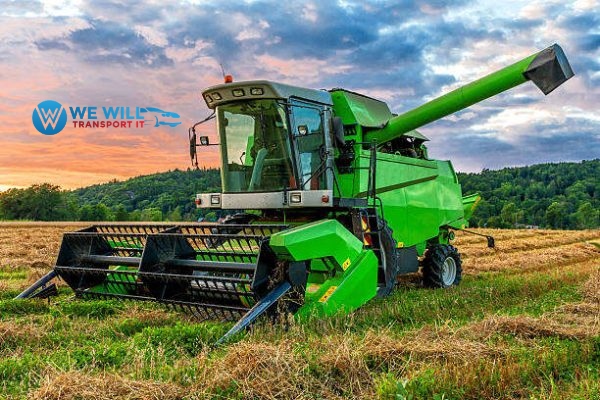
The combine is still in the field. The dealer 300 miles north has your new planter ready to pick up. Your cover crop window opens in six weeks.
The problem is not the equipment. It is the calendar. Farm equipment transport runs on the same seasonal rhythm as the operations it serves, and every carrier, every permit office, and every available trailer in the region feels the same harvest and planting pressure at the same time. The ones who plan ahead move equipment on their schedule. The ones who wait move it on whoever’s available.
This guide is written for farm operators, machine dealers, and ag auction buyers who move farm equipment on a regular schedule. It covers what drives seasonal pricing, how to measure your equipment correctly before you call a transport company, what rural road restrictions mean for your delivery window, and how to build transport into your operation so it stops being a scramble every spring and fall.
Why Farm Equipment Transport Gets Harder in September and March
Two pressure points hit the farm equipment transport market every year like clockwork.
The first is fall harvest, which runs from late August through November across most of the Corn Belt, Great Plains, and Cotton Belt. Combines, grain carts, cotton strippers, and forage harvesters all need to move during the same narrow window, either to new fields, to dealer service yards for pre-harvest maintenance, or to auction sites and new owners after the season closes.
The second is spring planting, which runs from March through May depending on the region. Planters, row crop tractors, anhydrous applicators, and tillage equipment come out of storage or arrive from dealers during the same compressed period when every farm operation in the region is trying to get into the field.
Both windows create the same problem: specialized trailer capacity tightens, permit processing times stretch, and carriers who are familiar with agricultural equipment and rural delivery conditions get fully committed fast. The best time to book farm equipment transport is as early as possible, especially before spring planting and fall harvest periods, which are the highest-demand windows for specialized trailers and experienced heavy haul coordination.
If you’re calling a transport company two weeks before planting starts, you are not getting the best carrier at the best rate. You’re getting whoever has space.
The Seasonal Cost Factor Nobody Talks About
Harvest season creates peak demand for farm equipment transport services, often resulting in premium pricing and reduced availability. Planning non-emergency moves during off-peak periods can reduce costs significantly, while emergency transport commands higher rates due to immediate response requirements.
The price difference between booking a combine haul in July versus booking the same haul in October can run 20 to 40 percent on identical routes. That premium is not arbitrary. It reflects genuine market conditions: more loads competing for the same trailer capacity, longer permit processing times as state DOT offices see increased application volume, and the operational cost to carriers of running tight schedules during harvest when weather-driven cancellations and field access problems create delays that ripple through their whole dispatch calendar.
The operators who consistently move equipment at better rates are not doing anything complicated. They are making the same decision your agronomist would recognize: they’re not trying to plant in the rain. They plan their transport windows around the seasonal demand curve the same way they plan their input orders around supplier availability.
Measuring Your Equipment Before You Call
The single most common reason a farm equipment transport quote changes between booking and pickup is incorrect dimensions. Spec sheets are a starting point, not a final answer.
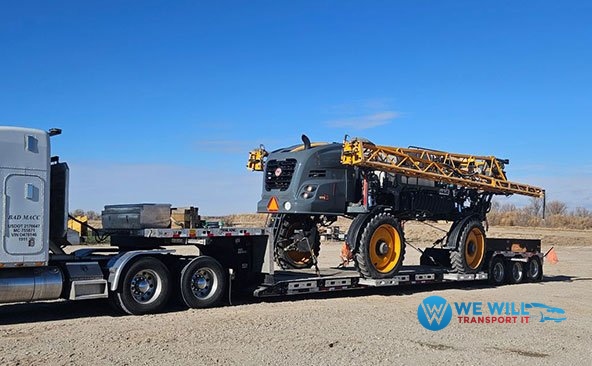
Many machines exceed standard transport dimensions and need specialized trailers and securement techniques. Anything over 8 feet 6 inches wide, 13 feet 6 inches tall, or 80,000 pounds gross vehicle weight requires oversize or overweight permits to move on public roads. Most large combines, wide-platform tractors, and cotton strippers will exceed at least one of those thresholds with attachments installed.
Here’s what to measure before you call:
Width is the most important dimension for permitting and often the least accurate on spec sheets. Measure the widest point of the machine as it will be transported, which means with headers, wings, or platforms attached if they’re staying on. A corn head that adds four feet to your combine’s transport width will change both your permit requirements and your trailer options.
Height should be measured with the cab at full height and any antennas or exhaust stacks that cannot be removed. A permit is required if your farm equipment measures an excess of 13 feet 6 inches in height. A large tractor with a cab can approach that limit before the trailer height is factored in, and trailer height varies by type, a lowboy deck sits considerably lower than a flatbed, which directly affects your clearance calculation.
Length matters for permit requirements and for rural road navigation. Combined tractor-implement combinations that cannot be broken down can exceed 65 feet in overall transport length, which triggers permit requirements in most states and limits the routes a carrier can legally use.
Operating weight versus shipping weight is a real distinction. Most spec sheets list operating weight with a full fuel tank, fluids, and ballast. Your transport company needs the shipping weight as the machine will actually be loaded, which may be lower if you drain fluids and remove ballast weights.
Give your transport company actual measurements, not spec sheet numbers. The spec sheet gets you a ballpark quote. The actual measurements get you a binding one.
What Agricultural Exemptions Actually Cover (and What They Don’t)
There is a common misconception that farm equipment moves are exempt from oversize permit requirements. Agricultural exemptions exist in most states, but they are narrower than most people assume.
Agricultural exemptions in Kentucky reduce or eliminate permit requirements for intrastate farm operations. However, a combine wider than 12 feet may still need a special oversize permit even with a farm exemption, and exemptions apply only to intrastate travel, moving goods within one state. Interstate transport typically requires standard permits.
The practical implications:
Moving your combine from one field to another on the same county road is almost always covered by agricultural exemptions in most states. Moving your combine from Iowa to Missouri is not. The moment you cross a state line, standard federal and state DOT permit requirements apply regardless of what’s being hauled.
Nebraska’s agricultural sector creates unique permitting situations during harvest seasons. Harvest season permits accommodate time-sensitive agricultural operations with special provisions that allow expedited permitting for loads directly supporting harvest activities. Timing becomes critical as crops must move from fields to storage or markets within narrow windows.
Several states have harvest season permit expediting programs that reduce processing time for agricultural moves during defined windows. These programs vary significantly by state and are not automatic, you need to apply and qualify. Your transport company should know which states offer them and how to take advantage of them on your specific route.
Rural Road Restrictions: The Delivery Problem Dealers and Auction Buyers Miss
The permit gets your equipment to the end of the county road. Getting it the last two miles to the field entrance is a different problem.
Spring thaw and heavy rain periods can trigger weight restrictions on county roads as surfaces soften. Harvest season brings heavy agricultural traffic that combines with oversize loads to strain rural road infrastructure.
County road weight restrictions during spring thaw, typically February through April across most of the northern Corn Belt, can prohibit the transport combination needed to deliver your equipment legally on certain roads. This is not a problem you can solve with a permit. The road is posted, and the restriction applies. The options are waiting for the restriction to lift, finding an alternative delivery route, or arranging for final-mile delivery by a different method once the primary haul reaches a legal staging point.
Before you confirm a delivery address, know the following about the road conditions at your farm:
Whether county roads to your property have posted weight limits that activate during spring thaw, and when those limits typically lift in your county. Whether the access road to your field or equipment shed can accommodate a lowboy combination, which is longer and less maneuverable than a standard flatbed. Whether low overhead clearances, utility lines, tree branches, barn entrances, exist between the nearest paved road and your final delivery point. The carrier needs to know these conditions before they commit to a delivery schedule, not after the truck is already on your road.
Auction Purchases Add a Time Pressure Layer
Buying farm equipment at auction introduces a hard deadline that many first-time auction buyers underestimate. Most auction houses require equipment to be removed from the premises within three to seven days of the sale. For large pieces of equipment at remote sale locations, that window can create real logistical pressure.
If you’re buying at auction, confirm the removal deadline before you bid on anything that requires a transport company. Add the permit lead time, which can run seven to fourteen days for oversize loads requiring route surveys and multi-state permits, and work backward from the removal deadline. If the math doesn’t work, either bid only on equipment you can move within the window or make transport arrangements before auction day, contingent on a successful purchase.
The operators who bid confidently on large auction purchases are the ones who already have a carrier relationship and know they can make a call the morning of the sale and get a reliable delivery estimate.
What to Confirm Before Any Farm Equipment Move
Whether you’re moving a single tractor to a new farm or a full harvest fleet to winter storage, confirm the following before the truck rolls:
Equipment specs as-transported: actual dimensions with all attachments, operating weight with fluids drained to transport level, and any components that need to be removed or pinned for transport.
Site conditions at both ends: ground conditions at pickup and delivery, access road width and any clearance restrictions, and whether a responsible party will be present at both locations.
Permit requirements for the specific route: state-by-state requirements if the move crosses state lines, any county road restrictions at the delivery end, and whether harvest season expediting programs apply to your move.
Insurance coverage: your transport company’s cargo insurance should cover the replacement value of your equipment. Confirm the coverage amount before the truck leaves, not after something goes wrong.
Timing relative to your operational window: if you need equipment on site by a specific date to stay on your planting or harvest schedule, that date needs to be in your transport agreement, not just mentioned in a phone call.
Ready to Move Your Equipment Before the Rush?
We Will Transport It has been moving farm equipment across all 50 states for over 15 years. We handle permits, route planning, and carrier coordination for equipment of every size, from single tractors to full harvest spreads. Our team works with farm operators, equipment dealers, and auction buyers who need equipment moved on a real agricultural schedule, not a freight broker’s idea of one.
Get a quote today and tell us your equipment specs, pickup location, and delivery timeline. We’ll handle the rest.