The Operating Engineer’s Guide to Heavy Equipment Transport
Moving heavy equipment to a job site is not a logistics afterthought. Get it wrong and you are looking at blown timelines, project delays, fines, and a machine parked on the shoulder waiting for a permit that should have been pulled days earlier.
This guide is for operating engineers, foremen, and signatory contractors who move machines and want to know what is involved before the first call to a carrier.
1. Know What You’re Moving
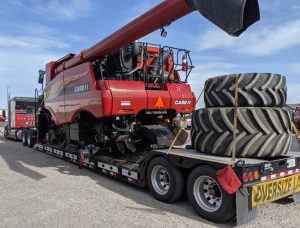
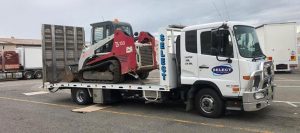
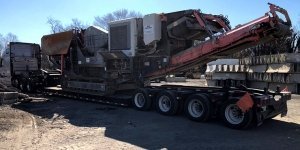
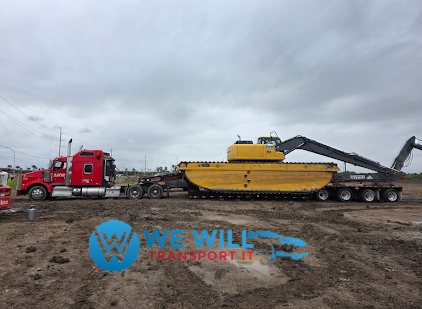
Document exact dimensions and weight before anything else: overall length with attachments, width at the widest point including tracks or blade, height at the highest point, and gross machine weight. These numbers drive everything downstream: trailer type, permit category, escorts, and routing. Guessing creates problems at weigh stations.
Quick reference by equipment type:
- Excavators (20-90 tons): Lowboy or RGN trailer; arm lowered for clearance.
- Crawler cranes: The most complex moves. Counterweights and boom sections often ship separately.
- Bulldozers: Blades and rippers frequently removed to meet width limits.
- Motor graders: Long wheelbase creates overhang on turns.
- Compactors and rollers: Straightforward, but drum width often triggers oversize thresholds.
We Will Transport It handles all of these. See the full heavy equipment transport service for specifics.
2. Permits: What You Need and Why
Failure to obtain proper documentation can result in delays, fines, and even impounded equipment.
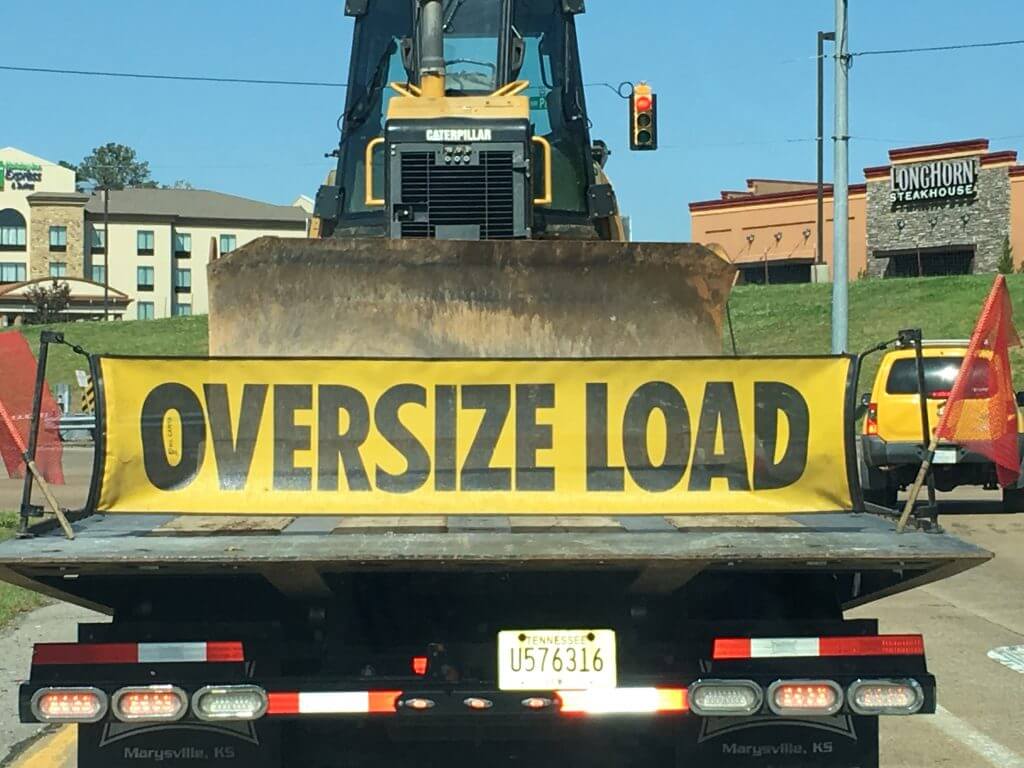
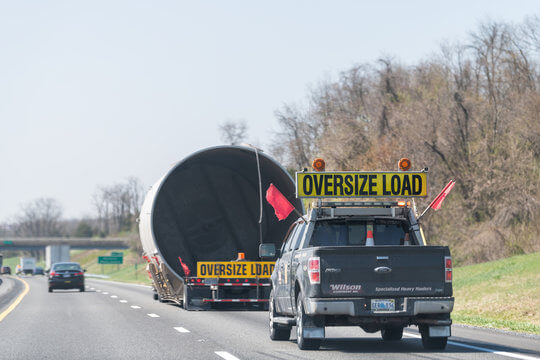
Oversize permits apply to dimension. Any load more than 8.5 feet wide is, by definition, an oversize load and, with few exceptions, requires a state permit to travel on public highways.
Overweight permits apply to weight. These limits vary by axle configuration and state, but are often capped at 80,000 lbs GVW without a permit.
Superloads are their own category. Superload weights exceed 181,000 lbs, and operators must apply to each state or province the load travels through to obtain the necessary permits.
Single-trip vs. annual: Single-trip permits cover a specific load, vehicle, and route, and are most practical for moving one machine to one job site. Annual permits allow unlimited moves over 12 months, but only for pre-approved routes and equipment types. Frequent movers save with annual permits; occasional moves favor single-trip.
Permits are state-specific. A three-state move means three applications. Submit applications at least two days before the transport date, and allow more for superloads. We Will Transport It pulls the permits as part of the heavy haul service, so this paperwork is handled for you.
For the federal baseline, see the Federal Motor Carrier Safety Administration (FMCSA).
3. Escort and Pilot Vehicle Requirements
Requirements vary by state and dimension. Arizona requires escorts for loads wider than 12 feet; Florida only for loads wider than 14 feet. Pilot cars warn oncoming traffic and clear the path under low bridges and through tight interchanges. Running without a required escort is fineable and can get your load held until you comply.
4. Travel Restrictions
States impose time-of-day and day-of-week limits. Ohio allows oversize transport at any time with a permit, while Michigan only allows it during daylight. New York City carries a reduced 8-foot width limit and restricts transport during peak traffic hours. Most states also block moves on major holidays.
A carrier that does not ask about your destination state’s restrictions before quoting a pickup date is worth questioning. For an example of state-specific routing, see how We Will Transport It handles New York heavy equipment transport around the Thruway and weight-limited bridges.
5. How to Vet a Carrier
Price is visible. Compliance is not. This is where contractors get burned.
The FMCSA cautions against businesses that are not specific about whether they are a broker or a carrier, because that distinction affects accountability and control over your equipment.
Ask before signing:
- Carrier or broker? If a broker, who is the actual carrier and what are their credentials?
- What is your DOT number? Verify the safety rating at safer.fmcsa.dot.gov.
- Insurance and authority? Ask for their “package” — the W-9, insurance certificate, and a copy of their federal authority.
- Who pulls the permits? If they expect you to, that is a red flag.
- What trailer for this machine? They should answer without hesitation.
- Done this equipment type before? Ask for references.
- Damage claims process? A good carrier records detailed condition checks at every handoff to determine fault if damage occurs.
6. Insurance
The FMCSA sets minimum liability requirements based on vehicle type and cargo. Do not assume the carrier’s policy covers your machine at replacement value. Know the difference: cargo insurance covers your equipment in transit; liability insurance covers damage to third parties or infrastructure.
Inspect your equipment against the bill of lading before signing. Once you sign confirming safe delivery, you cannot claim compensation for damage found afterward.
7. Common Mistakes That Delay Projects
- Wrong dimensions submitted. Measure in transport position, not operating position.
- Assuming the carrier handles permits. Confirm in writing.
- Booking on price alone. An unqualified carrier costs far more than the quote saved.
- Ignoring bridge ratings. Superloads require engineering evaluation of crossings.
- Skipping travel-window checks. A load held at a state line flows straight into your mobilization schedule.
Ready to Move Your Equipment?
We Will Transport It handles heavy equipment transport for contractors nationwide. We pull the permits, coordinate escorts, and get your machines there on time and undamaged. Call us at (800) 677-1196 or fill this out to get a free quote!