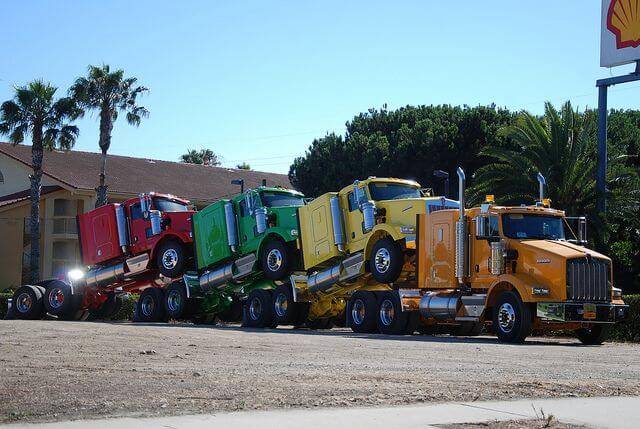
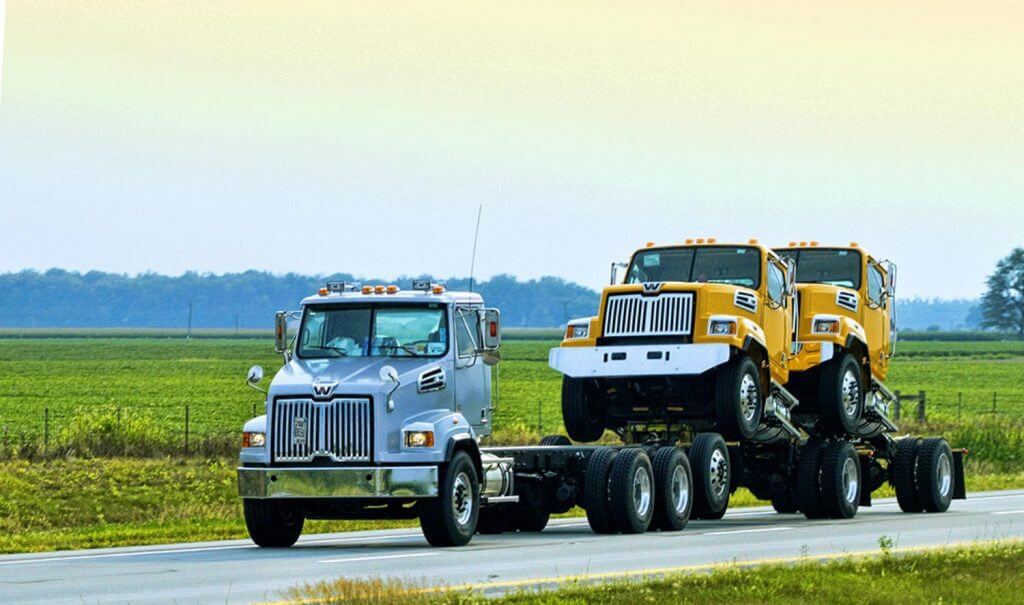
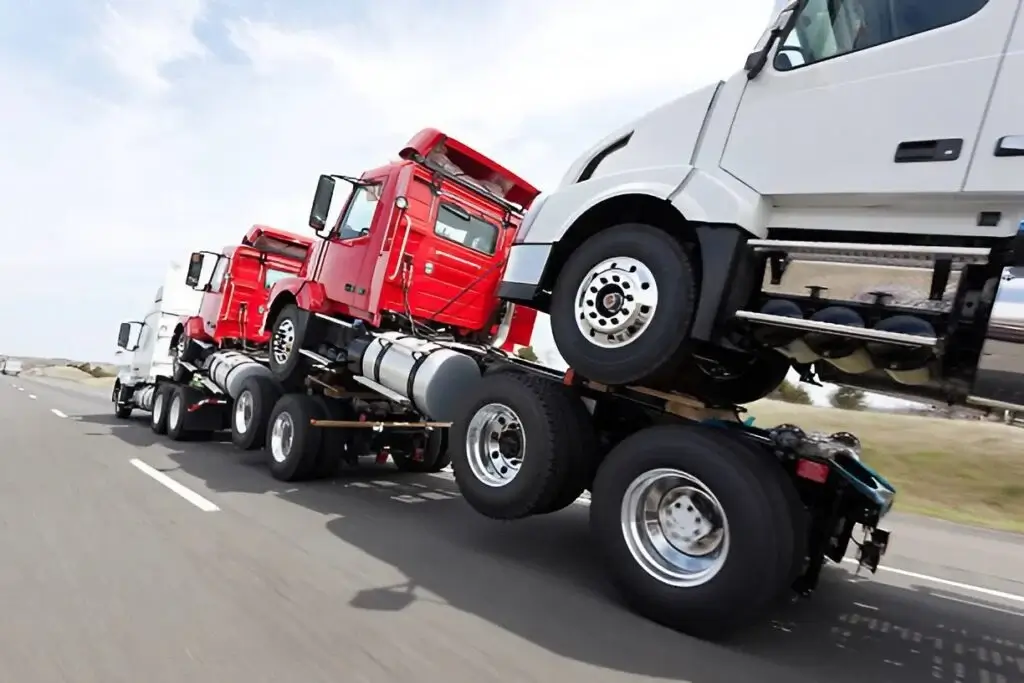
Truck piggybacking might sound confusing at first, but the concept is actually quite simple. If you’ve ever driven past one semi stacked on top of another, you’ve already seen truck piggybacking in action. Truck piggybacking is a transport method where one truck is loaded on the back of another truck or trailer and moved as one unit. Piggybacking is commonly used for semi-truck and tractor transport to relocate multiple large or commercial vehicles at once, reduce mileage on the transported trucks, and streamline long-distance moves.
The piggybacking transport method is designed to solve one of the biggest challenges in heavy transport: managing height limits on the road. Without piggybacking, moving multiple large trucks efficiently would be far more difficult and far more expensive. You can see how this same approach is used across different load types in our full guide to piggybacking heavy equipment transport.
Understand How Truck Piggybacking Works
Before planning the move of a large truck or piece of equipment, it helps to understand how truck piggybacking works and why this method is so widely used in the industry.
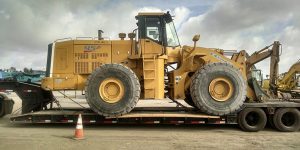
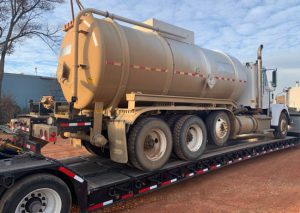
- First, Start by choosing the right trailer for the job. Check the trucks’ size and weight carefully using a five-point inspection. Most piggyback loads use larger trailers such as stepdecks, RGNs, or other setups made to safely carry the height and weight of stacked vehicles.
- Second, the loading process: The first truck is positioned and secured onto the trailer. The second truck is then driven or lifted into place using ramps or a crane, depending on the setup.
- Third, securing the load: A professional driver secures the stacked trucks using heavy-duty chains and commercial-grade tie-downs. These securement points are checked multiple times before transport begins to ensure the load remains stable throughout the journey.
- Fourth, route planning: When trucks are piggybacked, the overall height and weight of the load increase. An experienced driver must carefully plan routes that avoid low bridges, weight-restricted roads, and other travel limitations.
- Finally,, transport and delivery: Once everything is strapped down and the route is mapped out, the piggybacked trucks are ready for transport. Drivers get pulled over by state troopers for regular inspections along the way to double check everything remains properly legal. After delivery, the unloading process is carefully and thoroughly checked until both trucks are safely back on the ground.
Truck Piggybacking Benefits for Long-Distance Transportation
One of the biggest benefits of truck piggybacking is reduced the wear and tear on your vehicle. Instead of putting hundreds or even thousands of miles on your truck, the vehicles arrive without engine stress and tire wear. Truck piggybacking helps protect long-term vehicle value.
Piggybacking also reduces labor costs and fuel use since multiple vehicles are moving at once. Another key advantage is organization. With multiple trucks transported in a single shipment, delivery timelines are easier to manage, and vehicles arrive together.
When Does Truck Piggybacking Makes the Most Sense?
Truck piggybacking makes the most sense when multiple commercial vehicles need to be moved over long distances.
Truck Piggybacking makes the most sense:
- For new truck delivery
- When manufacturers ship several semi-trucks to dealerships in a single load.
- Fleet relocations, when businesses move service trucks or box trucks between job sites.
- For non-running or out-of-service trucks that cannot be safely driven.
- Towing purposes
Why Piggybacking Has So Many Rules
For safety on the road, truck piggybacking must follow strict state and federal transport regulations. Because stacked trucks add more height and weight, if any part of the piggybacked load exceeds standard limits, the proper permits must be secured before transport begins.
Safety is a top priority during every piggyback move. Each truck must be secured using commercial-grade chains, binders, and tie-downs that meet load securement standards. Drivers also perform routine inspections during transport to confirm that nothing has shifted. These safety measures help prevent road hazards and protect both the cargo and surrounding traffic.
These loads are also moving through multiple states and different states may also have specific travel rules, including time-of-day restrictions, holiday travel bans, or escort vehicle requirements for oversized loads.
Time-of-day restrictions: Florida, Ohio, Missouri
Holiday travel bans: Missouri, Ohio, New York, Pennsylvania, Minnesota, North Carolina, Nebraska, Michigan
Escort vehicle requirements (oversized loads): Indiana, Ohio, Florida, Washington, California, Texas
Key Takeaways for Shippers
Truck piggybacking is a practical method for moving multiple vehicles safely.With the truck piggybacking method, the wear and tear on your vehicle is reduced and long hauls are streamlined. Understanding how piggybacking works, when it makes the most sense, and what regulations apply allows businesses in the transportation industry to make smarter hauling decisions. If you’re considering truck piggybacking for your next shipment, connecting with We Will Transport It, an experienced transport provider can help streamline your next move.