What exactly is Monster Truck and Why Does It Need to be Transported?
In general, a monster truck is a kind of oversized, modified truck built for durability. Monster trucks are recognized for their oversized tires and heavy suspension which supports the truck’s weight and absorb impact. These trucks are usually used during live shows where they often jump, crush cars, or have to land from high drops. The large size and modifications of a monster truck acts as protection for the driver during the rowdy Monster Truck shows.
Monster trucks are specialty trucks that require serious logistics operation, not a simple tow due to their massive size and specialized build. To be safely transported, it’s important to work with a trusted licensed, bonded, and insured logistics company to transport monster trucks. These trucks can’t be moved like other oversized equipment.
What Monster Trucks Are Used For?
Monster trucks are used for entertainment and competition purposes. These trucks spend as much time being hauled around as they do performing.
- Live monster truck shows and stadium events
- Racing and freestyle stunt competitions
- Car-crushing exhibitions
- Promotional appearances at parades, fairs, and special events
- Media appearances, commercials, and photo shoots
Because of this constant travel schedule to get to these entertainment venues, monster trucks need to be handled carefully to make sure that drivers get their trucks to them in tip-top shape to immediately hit the dirt track.
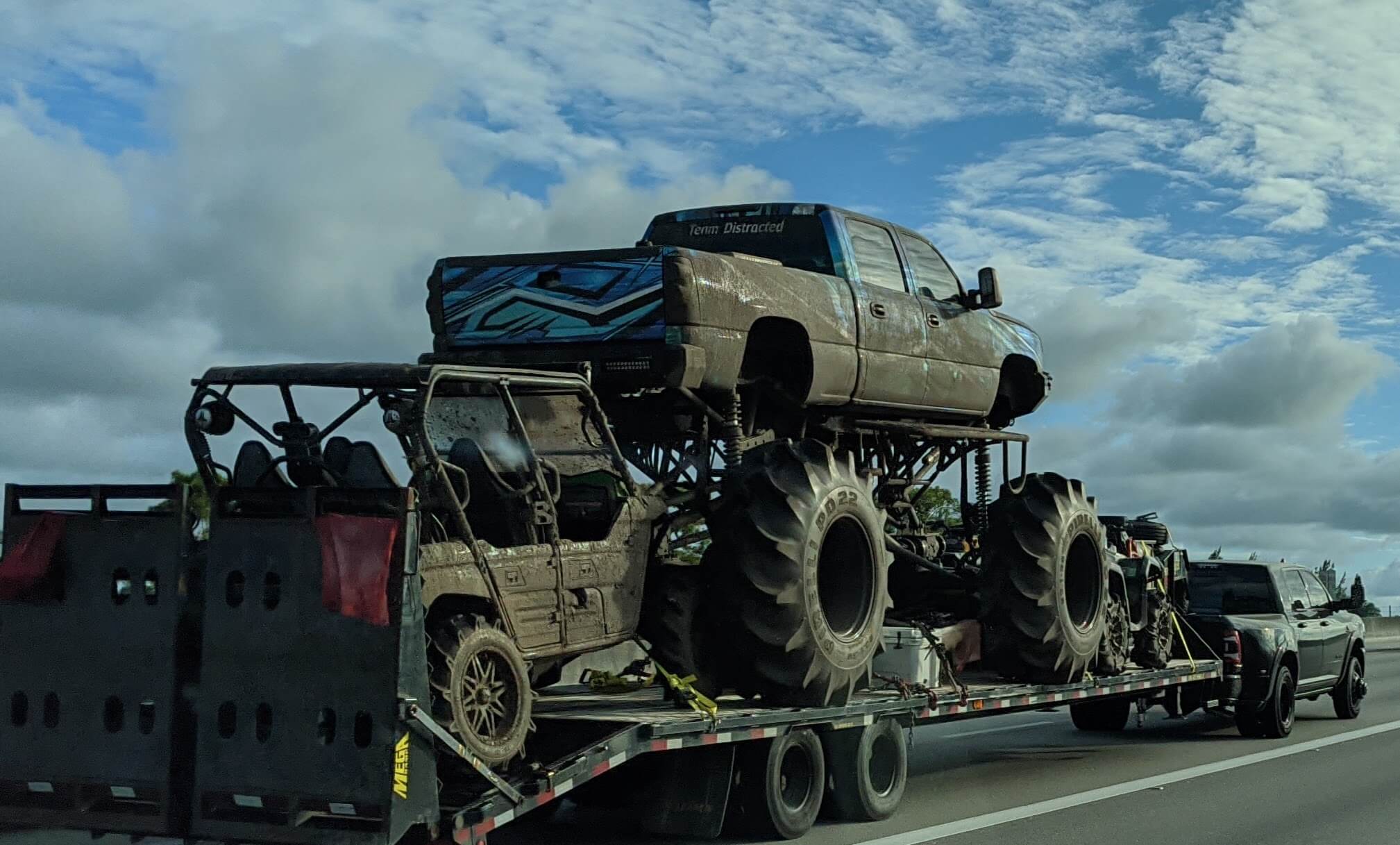
Monster Jam vs. Independent Monster Trucks
Monster Jam is the most well-known monster truck brand in the world. The brand has its own large, organized entertainment franchise with its own events, drivers, rules, and iconic trucks.
Independent monster trucks, on the other hand, aren’t aligned with the Monster Jam brand, these monster trucks are often owned by private teams or small promoters and perform at regional shows, fairs, and local motorsports events.
Are Monster Trucks Considered Heavy Equipment?
Unlike cranes and bulldozers, monster trucks aren’t specifically classified as your ‘traditional’ heavy equipment in the same way. Those machines are built for construction, industrial work, and material handling. However, when it comes to transportation and logistics, monster trucks are treated like heavy equipment. Like heavy equipment, monster trucks have oversized frames and extreme weight which means they require specialized trailers, experienced drivers, and oversize permits to legally be moved on public routes. From a logistics standpoint, monster trucks fall into the same category as heavy equipment transport as they also demand professional handling from pickup to delivery.
| Feature | Monster Truck | Heavy Equipment |
|---|---|---|
| Purpose | Shows, stunts, racing, and events | Construction, digging, lifting, or moving stuff |
| Weight | Very heavy, usually weighs about 10,000–12,000+ lbs | Can be heavy too, usually weighs 1,000lbs to over 100,000 lbs |
| Transport | Needs special trailers and permits | Needs special trailers and permits |
| Built For | Absorbing jumps and protecting driver | Handling heavy loads safely |
How a Monster Truck Is Moved
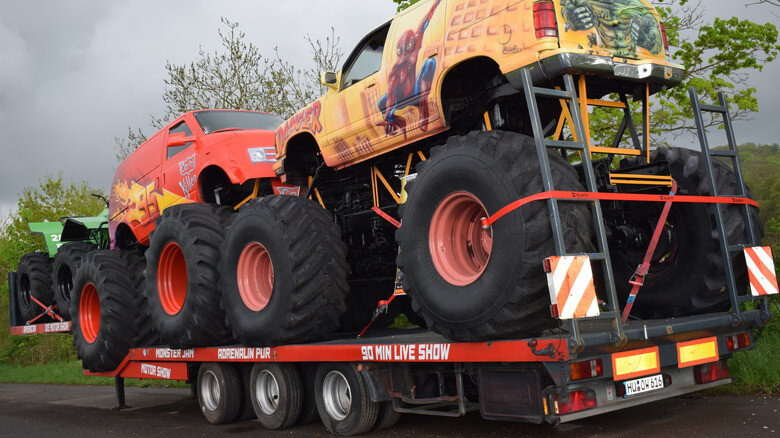
Transporting a monster truck is a carefully planned process because of its odd dimensions to make sure the truck arrives safely and ready to perform. Here’s how it’s usually done:
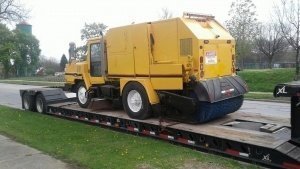
- Load onto a special trailer: Most often a lowboy or step deck, using ramps or a winch.
- Secure the truck: Heavy chains and straps hold the truck in place during the delivery.
- Plan the route: Drivers follow a pre-planned path and get oversize permits if needed.
- Unload carefully: Once at the destination, the truck is unloaded and ready for the show.
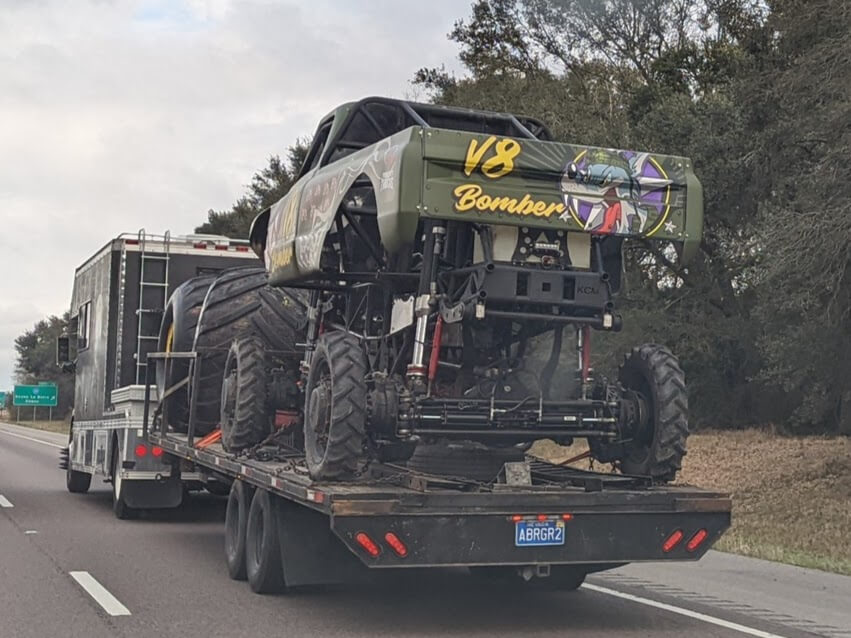
Unusual Handling: When the Monster Trucks Tires Are Removed
When hauling a monster truck, some logistics companies will remove the tire for an easier hauling journey. Monster truck tires are enormous, often spanning 66 inches tall making them too tall for many bridges and overpasses.
- When the Tires Are Removed: The tires are usually removed when the loaded height would exceed legal road limits, if the monster truck is being moved a long-distance on highways or if the route has low bridges. In these cases, the tires are transported separately, usually on the same trailer or a second trailer.
- When the Tires Stay On: The tires stay on when the relocation distance is short and if the route allows for the height and weight of the monster truck and the tires at the same time.
The option to remove the tires matters because it results in a safer and legal load. It ensures a seamless delivery as the option to remove tires reduces the risk of clearance issues.