Minnesota Permits for Heavy Equipment Transport
Hauling large machines across Minnesota has state laws that set the limits on how wide, tall, long, and heavy a load can be to safely move on public roads. Equipment such as excavators, dozers, and cranes exceed these limits. Loads that are wider than 8 feet 6 inches, taller than 13 feet 6 inches, or heavier than 80,000 pounds require a special permit from the Minnesota Department of Transportation.
Not having the proper permit leads to fines, impounded loads, and costly delays. We Will Transport It handles the paperwork requirements, so each machine moves legally and arrives on time.
Permits We Secure for Heavy Hauling in Minnesota:
- Single-Trip Permit – Handles one load moving from one location to another on a set route. This is the most common permit for hauling a single machine to a job site. MnDOT reviews the route to make sure every bridge and road along the way can handle the load.
- Annual Permit – Allows repeated moves of oversize or overweight loads throughout the year. Companies that haul equipment regularly save time and money with this option.
- Job Permit – Works for multiple moves tied to one project over a set period. Contractors moving several machines to the same site use this permit.
- Superload Permit – Required for the largest equipment on the road. Loads over 16 feet wide, 16 feet high, or heavier than 250,000 pounds. These moves demand detailed route studies and extra planning from MnDOT engineers.
- Local Permits – Cities and counties control their own roads. Loads moving on streets outside the state highway system often require separate approval from those local governments. Our specialists track down every local permit the route requires.
Rules That Come With the Permit
Oversized loads in Minnesota have strict rules about the travel times, signs, flags, lights, and escort vehicles. Wide loads need “OVERSIZE LOAD” banners and safety flags. Extra wide or long transportation requires pilot cars in the front, behind, or both. Travel is restricted during rush hours in the Twin Cities metro and during major holidays. Weather closures apply too, since MnDOT does not allow oversized moves when snow or ice makes roads unsafe.
We Will Transport It Handles the Paperwork
Permit rules change based on the machine, the route, and the season. Our team measures every load, files the right applications, plans a legal route, and lines up escort vehicles when the state requires them.
Call (877) 880-5991 for a free quote on fully permitted heavy equipment transport anywhere in Minnesota.
Routes in Minnesota for Heavy Equipment Shipping
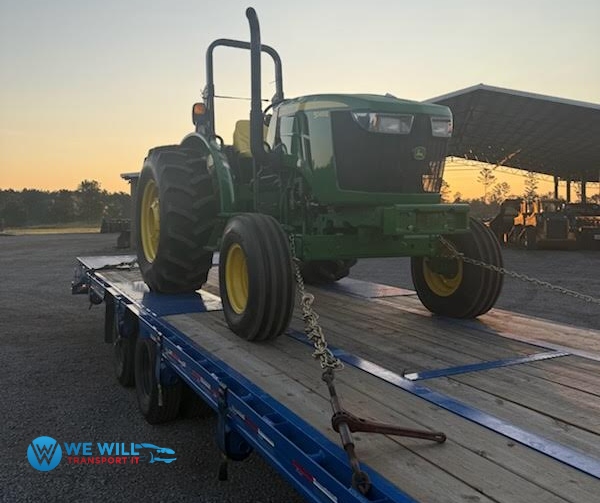
Moving heavy equipment across Minnesota requires route planning. Oversized loads are transported on a path approved by the state, and that path must clear bridges, power lines, and work zones along the way. We Will Transport It knows the highways to use to haul excavators, dozers, cranes, and mining equipment to their destination.
Minnesota’s highway network connects the Twin Cities, the Iron Range, the Port of Duluth-Superior, and farm country in every corner of the state. The routes listed below move heavy equipment through the region.
What are the major highways in Minnesota?
- Interstate 94 – The main east-west artery through the state. This route connects Moorhead, St. Cloud, Minneapolis, and St. Paul before moving into Wisconsin. Contractors moving equipment between the Twin Cities and the Fargo area depend on this corridor.
- Interstate 35 – The north-south interstate. It runs from the Iowa border through Owatonna and the Twin Cities, then splits toward Duluth. Machines headed to the port or the North Shore use this highway.
- Interstate 90 – The southern east-west route. It moves loads across the bottom of the state through Austin, Albert Lea, and Worthington, connecting Minnesota to South Dakota and Wisconsin.
- U.S. Highway 53 – The workhorse of the northland. This road connects Duluth to Virginia, Eveleth, and International Falls. Mining equipment bound for the Iron Range moves up and down this corridor.
- U.S. Highway 169 – A key route from the metro to Grand Rapids and the western Iron Range. Loads leaving the Twin Cities for northern mining and logging country use this highway.
- U.S. Highway 2 – The northern east-west connector. It links Duluth to Grand Rapids, Bemidji, and East Grand Forks, carrying freight across the top of the state.
- U.S. Highway 10 – A busy diagonal route between the Twin Cities, St. Cloud, Detroit Lakes, and Moorhead. Many haulers use this road when interstate restrictions slow things down.
- U.S. Highway 52 – The direct link between St. Paul and Rochester. Construction equipment serving the fast-growing southeast moves on this corridor.
- Interstate 494 and 694 – The loop around the Twin Cities. Oversized loads use these beltways to go past downtown traffic and connect between the major interstates.
Why Choose We Will Transport It in Minnesota
When it comes to heavy equipment hauling in Minnesota, you need more than just a truck, you need a team that understands every regulation and every mile. Choosing We Will Transport It means working with a transportation company backed by years of experience moving oversize and overweight loads safely across Minnesota.
Our expert heavy machinery movers handle everything from construction machinery to industrial equipment, with real-time tracking, 24/7 support, and cheap pricing on every job. We take care of permits, escorts, and route planning, so you can focus on your machine and not the logistics.