Heavy Equipment Types We Move In Ohio
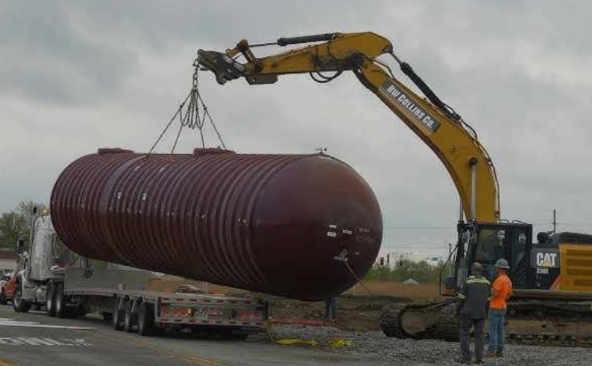
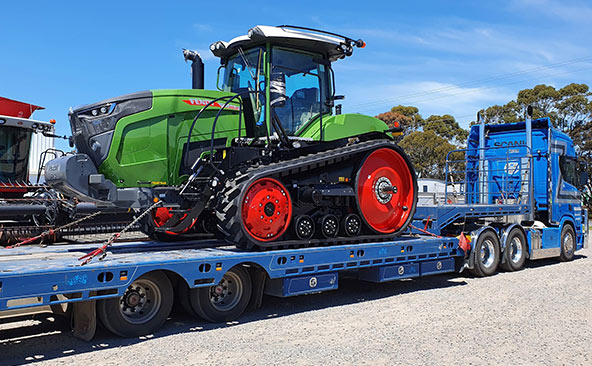
We specialize in moving oversized, overweight, and highly complex machinery for industries that cannot afford delays or damage. From moving excavators and cranes safely loaded and delivered to wheel loader transport, dump truck hauling, and bulldozer transportation, we handle it all.
Beyond construction, we also handle agricultural machinery transport, manufacturing equipment hauling, and generator moves. Ohio agriculture equipment transport is a growing part of what we do, since farmers and ag businesses need dependable partners who understand both the equipment and the roads. Additionally, forklift hauling and backhoe shipping are often requested.
We Will Transport It goes well beyond state lines. We offer nationwide routing to or from Ohio, handling cross-country moves, auction equipment pickup and delivery, and port shipping for people who need coast-to-coast coverage.
Ohio Heavy Equipment Shipping Costs
Heavy equipment transport costs start at $2 to $4 per mile. The price to move heavy equipment in Ohio depends on the fuel prices, trailer requirements, and permit costs, as well as total mileage, load dimensions, and any special rigging or escort services required.
We Will Transport It offers transparent pricing and works with people to find the most cost-effective solution without cutting corners on safety or compliance. Expedited heavy equipment transport is available for urgent moves, and door-to-door delivery is also offered.
- Dimensions (length, width, height, weight)
- Distance traveled
- Market fuel rates
- Permits, escorts, and route surveys
Ohio Heavy Equipment Transport Permits
Moving heavy equipment in Ohio is not something anyone can do without the right paperwork. The Ohio Department of Transportation requires a superload or overdimensional permit for any load exceeding the standard legal limits. Those limits are 80,000 pounds gross vehicle weight, 8 feet 6 inches wide, 13 feet 6 inches tall, and 53 feet long for a single vehicle.
A permit is required whenever a load exceeds Ohio’s legal size or weight limits. Ohio issues single-trip permits and multi-trip permits depending on how often similar loads are transported. If hauling a crane, bulldozer, or an excavator regularly, a multi-trip permit can save time and the paperwork. For any load that exceeds 150,000 pounds or goes past certain size limits, Ohio classifies it as a superload, and the permit process gets more involved. Our specialists may need to submit a route survey, hire a licensed pilot car escort, and sometimes coordinate directly with utility companies to handle overhead lines during the route.
Fees are based on the load’s size and weight and the distance it is being transported. Ohio also has move time restrictions on many permits. Some loads can only travel during daylight hours, and weekend or holiday travel may not be allowed depending on the equipment size.
Ohio Regulations for Oversized and Overweight Loads
Ohio follows a set of rules that apply to every oversized or overweight load on its roads, and knowing them upfront prevents delays and fines.
Width over 12 feet requires one pilot car in front of the load. A width over 14 feet requires pilot cars at both the front and rear. Loads over 14 feet 6 inches wide or over 150,000 pounds require a law enforcement escort, which must be arranged in advance and usually incurs an additional cost. Height over 15 feet also triggers a review process because of bridge clearances and overhead utility lines.
Ohio enforces seasonal load restrictions from January through April each year. During this time, roads that are not built to handle the freeze and thaw cycles of winter are subject to special weight limits. These are called spring thaw restrictions, and they apply to many county roads and some state routes. If the route includes any of those roads during those months, the heavy haul may need to wait, reroute, or get special approval.
Permits must be inside the cab of the truck at all times during the move. Ohio State Highway Patrol and local law enforcement can stop and inspect oversized loads at any moment. These violations can result in fines, and in some cases, the load may be held until corrections are made.
Local Ohio Heavy Equipment Hauling
Need a fast, affordable heavy equipment move within Ohio? We Will Transport It specializes in same-day and next-day pickups from Cleveland to Cincinnati, Toledo to Columbus, and Akron to Dayton.
Whether you’re moving a skid steer under 20 ft, a forklift, or a small dozer, our hotshot trailers and local flatbeds keep costs low and deliveries quick. No permits? No problem, we handle everything.
- Equipment Types: Skid steers, forklifts, small dozers, compact machinery
- Service: Same-day or next-day pickups, fully insured, tracked transport
Call (877) 880-5991 now for a same-day Ohio heavy equipment transport quote.
State-to-State Heavy Equipment Transport from Ohio & Coast-to-Coast Shipping
Do you need to move equipment outside of Ohio? We offer full-service, coast-to-coast heavy equipment hauling with complete compliance. From Ohio to Texas oil fields, Florida ports, California job sites, or New York warehouses, we secure multi-state permits, plan bridge- and route-safe paths, and assign pilot cars when needed.
If your heavy machinery is oversized or overweight? No problem. Our fleet includes RGNs, Lowboys, and Step Decks to safely transport excavators, cranes, combines, and more.
- Services: Door-to-door, fully tracked, fully insured
- Equipment Types: Excavators, cranes, bulldozers, combines
Schedule your Ohio heavy equipment shipment, local or state-to-state.
Trailers for Ohio Heavy Equipment Transport
Using the right trailer for the job is crucial when it comes to trusting a heavy equipment transport company to safely and efficiently move your equipment. Our range of trailers and trucks includes a variety of specialized trailers to handle any size or type of heavy machinery in Ohio:
- Flatbeds and Hotshot Trailers: for compact machinery like skid steers and small dozers.
- Double Drop Trailers: perfect for taller equipment that exceeds standard height restrictions while maintaining safe clearance.
- Extendable Removable Goosenecks: flexible for oversized or nonstandard shaped loads, including cranes, excavators, and construction equipment.
- Lowboys and Step Decks: engineered for extremely heavy or tall machinery, ensuring secure, road-legal transport over long distances.
No matter your equipment size or route, we match the trailer type to your load for safe, on-time delivery.
Major Routes Used for Heavy Equipment Transport in Ohio
Ohio is in a good location for heavy hauling. It connects the Midwest to the East Coast and gives transporters access to a solid network of interstates and state highways.
Interstate 70 runs east to west across the middle of the state and is one of the most traveled corridors for heavy equipment transport between Columbus and the Indiana or West Virginia borders. Interstate 71 runs north to south, connecting Cleveland to Columbus and then to Cincinnati, making it a go-to route for loads moving through the heart of the state. Interstate 76 and Interstate 80 both serve northern Ohio and are commonly used for loads coming out of or heading into the Cleveland and Akron areas.
Interstate 75 is another heavily used corridor, running north to south through Toledo, Dayton, and toward Cincinnati. For loads heading into or out of the industrial areas around Youngstown and eastern Ohio, Interstate 80 and U.S. Route 30 are frequently part of the move.
For heavy equipment being hauled into rural or the construction areas, state routes like Ohio 30, Ohio 33, and Ohio 7 are used. These roads require more attention during permitting due to lower bridge clearances, narrower lanes, and more weight-restricted sections.
Ohio Ports and Key Shipping Hubs for Heavy Equipment
Not every heavy equipment transport has to start on a highway. Some loads come in by water or rail, especially large industrial machinery or equipment ordered from overseas.
The Port of Cleveland on Lake Erie is Ohio’s main port for international and domestic water freight. It handles cargo ships that come through the St. Lawrence Seaway system, which connects the Great Lakes to the Atlantic Ocean. Large machinery and industrial equipment often arrive here before they get loaded onto a flatbed or lowboy trailer for their final destination in Ohio or a nearby state.
The Port of Toledo is another active port along Lake Erie and handles significant cargo volume every year. It serves manufacturers and heavy industries in northwest Ohio and is a point of entry for equipment heading to that region.
For moves that involve rail, Ohio has freight rail access through several major carriers with terminals in Columbus, Cleveland, Cincinnati, and Toledo. Rail can be a practical option for hauling very heavy equipment over long distances before the final road portion of the haul.
Equipment dealers, contractors, and plant managers planning to move into Ohio should know which port or hub the equipment enters through. It affects the permit route, timeline, and how much coordination is needed between the port, the trucking company, and any escorts required for the road portion of the heavy equipment transportation.