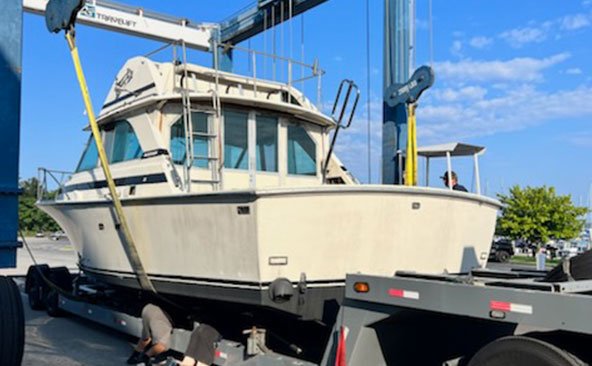
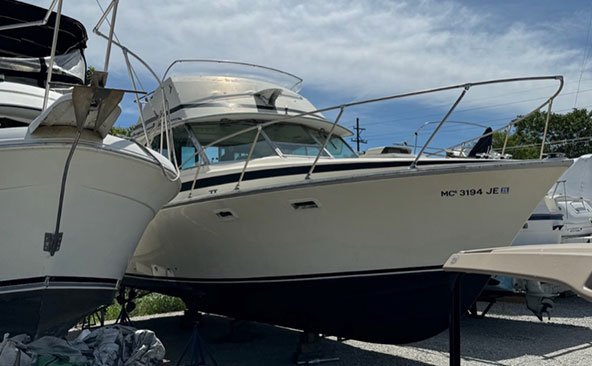
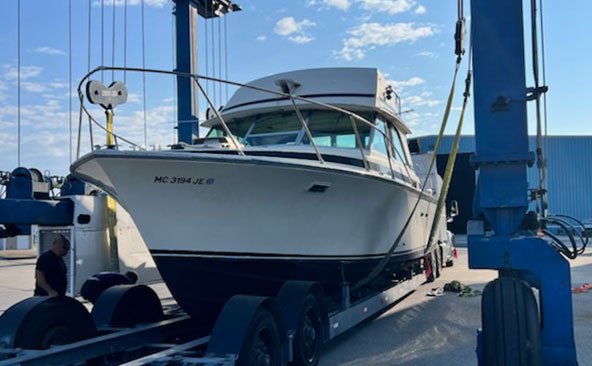
People try to save money by moving boats themselves, and it often does not work out. A mismatched trailer can crack a hull. One wrong move by a driver who hasn’t moved anything wide can ruin the vessel. This is where a specialized marine transport company is required. The specialists know how the water pulls weight, how trailers need to be positioned, and what can go wrong if a load shifts mid-drive. Top-rated Michigan boat haulers aren’t just truck drivers with trailers attached. Most have spent years learning the different types of hull shapes.
Specialized equipment matters here, too. Bunk trailers cradle a hull so that the weight doesn’t pool in one spot and crack the fiberglass. A company that owns the right equipment and knows how to use it is worth paying for.
Michigan Boat Transport Costs
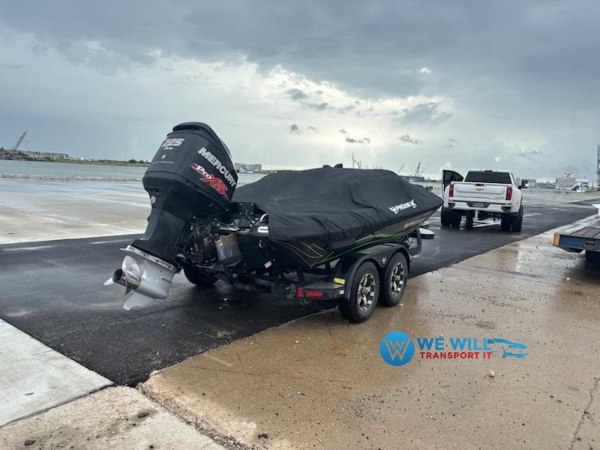
Michigan overland boat transport costs start at $2.00 to $5.00 per mile, but the exact amount depends on a few factors. Total distance plays a role, but so do total weight, beam width, and the type of trailer the vessel requires. Wider boats sometimes require permits and an escort vehicle, which increases the cost of shipping an oversize boat.
We Will Transport It offers an online boat shipping cost calculator. Include the distance and your boat’s dimensions, and you’ll get a price from one of our highly rated specialists.
Boat Types We Move in Michigan
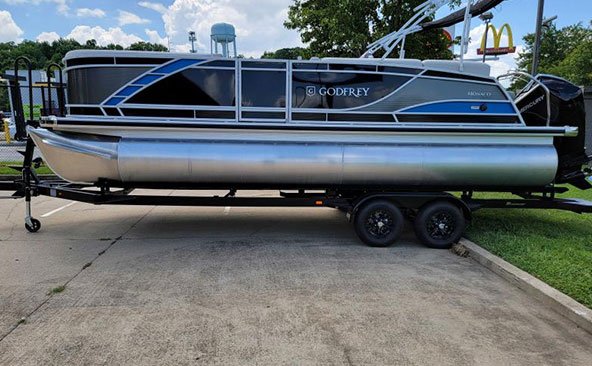
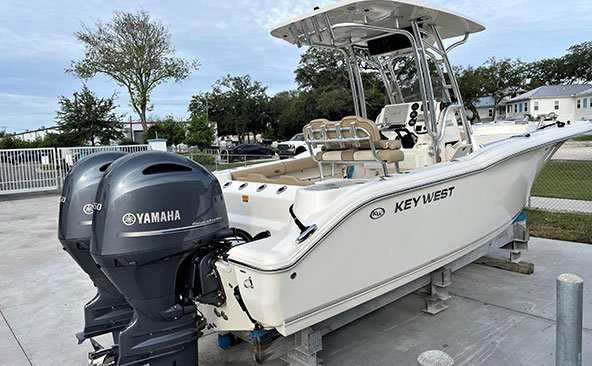
Jet ski shipping doesn’t require nearly as much setup as large yacht transport does. Bass boat transport and center console boat shipping usually use lighter trailers, while bowrider and pontoon hauling sometimes require a wider load setup. Luxury yacht transport requires extra padding and straps.
For sailboats, the mast often has to come down before the move starts. Houseboat shipping requires specialized trailers, given how boxy and heavy those hulls tend to be. We Will Transport It has experienced boat transporters who know how to handle each of these differently, rather than treating every boat the same.
Permits for Oversized Boat Transport in Michigan
Most trailered boats are considered what Michigan calls “oversize loads.” When a boat and trailer combination exceeds certain size limits, a special permit is required before it can legally move on a Michigan road. The Michigan Department of Transportation handles all of these permits.
- Any load wider than 8 feet 6 inches requires an oversize permit.
- Any load taller than 13 feet 6 inches requires an oversize permit.
- Any combined length over 65 feet requires an oversize permit.
- Single-trip permits handle one move from the location where the boat is picked to the destination.
- Annual permits are available for hauling a boat repeatedly from a certain location to the destination, so you do not have to apply for a permit every time.
- Most permits are issued within one business day, though larger or more complex loads can take longer because the state reviews the planned route first.
- Night travel is restricted for many oversized loads, meaning movement is limited to daylight hours only.
- Holiday weekends come with blackout periods where oversized transport is not allowed on the road at all.
- Planning around these travel windows is one of the most important parts of getting a boat moved on schedule.
Boat Transport Michigan to Florida
We are a Boat Transport specialist from Michigan to Florida and vice versa, with offices around Florida and Michigan and the best relationships in every port and Marines. Instead of fighting with your boat and hitch, let the professionals at We Will Transport It handle your boat hauling needs in Michigan. We will provide you with a clear, free quote that will give you a transparent price for the cost of boat hauling.
The Road Rules for Boat Hauling in Michigan
Michigan has weight limits on its roads and bridges that our specialists ensure to follow. These limits exist because heavy loads, especially repeated ones, break down pavement and stress older bridges faster than lighter traffic.
- Single-axle trailers can only carry up to 18,000 pounds under normal conditions.
- Tandem axles are limited to 32,000 pounds.
- Loads exceeding those numbers require a pre-approved route that avoids bridges rated below the haul weight.
- A boat wider than 14 feet on the trailer requires an escort vehicle riding along.
- Extremely wide loads require one escort car up front and another one following behind.
- Escort drivers manage traffic flow, flag low clearances, and help with tricky turns along the route.
- Late winter and early spring bring frost laws into effect, usually sometime in February and lasting into April.
- Frost laws significantly reduced the legal road weight during that time.
- The reason is simple: frozen ground thaws unevenly, and the pavement above it gets soft and vulnerable.
- Carriers who ignore frost law restrictions can be fined and held liable for road damage.
Major Roads for Michigan Boat Transport
Michigan’s two-peninsula layout creates some routing challenges that do not exist in most other states. The Mackinac Bridge is the only land connection between the Upper and Lower Peninsulas, which means every boat heading up has to cross it.
- I-75 is the most used route for Michigan boat transport, going from the Ohio border north to Detroit, Flint, and Saginaw before going to the Mackinac Bridge.
- I-94 crosses the Lower Peninsula east to west, connecting Port Huron and Detroit on the Lake Huron side to Benton Harbor and the Lake Michigan shoreline.
- I-96 connects Detroit to Grand Rapids and then continues west to Muskegon, making it a great route for boats heading to the west side of the Lower Peninsula from metro Detroit.
- US-31 follows the Lake Michigan coastline through Muskegon, Grand Haven, Holland, South Haven, and St. Joseph, and is extremely active during spring launch and fall seasons.
- US-23 mirrors the Lake Huron shoreline on the eastern side of the state, going from Port Huron up through Alpena and Rogers City to the Straits area.
- M-22 loops through the northwest Lower Peninsula near Traverse City, Frankfort, and Northport, but its tight curves and narrow lanes make it not a good route for anything large.
- M-28 is the main road across the Upper Peninsula, going east to west from Sault Sainte Marie through Marquette toward Ironwood.
- US-2 traces the southern UP shoreline along northern Lake Michigan from St. Ignace through Escanaba and Menominee to the Wisconsin border.
- I-69 and I-196 work as secondary connectors in southern Michigan, giving our drivers a way around congestion in the Detroit area.
- The Mackinac Bridge carries all Upper Peninsula traffic and has its own wind speed rules that can shut down oversized loads during bad weather.
- M-119, the Tunnel of Trees road near Harbor Springs, is completely off the table for boat transport due to low tree canopy and a road too narrow for wide loads.
- US-41 goes diagonally across the Upper Peninsula from Menominee through Marquette to Copper Harbor at the tip of the Keweenaw Peninsula.
Every Port and Water Access Point in Michigan
Michigan has access to four of the five Great Lakes and has more freshwater coastline than any other state. The Ports are spread across both peninsulas.
Lower Peninsula
- Port of Detroit handles commercial and recreational traffic along the Detroit River and connects to Lake Erie.
- Port of Monroe sits on Lake Erie near the Ohio border and handles a mix of freight and recreational boats.
- Port of Port Huron is where Lake Huron drains into the St. Clair River, right across from Sarnia, Ontario.
- Port of Bay City is at the bottom of Saginaw Bay and is among the larger freshwater ports in the state.
- Port of Saginaw connects to Bay City through the Saginaw River and handles inland water transportation.
- Port of Alpena faces Thunder Bay on Lake Huron and serves the northeastern Lower Peninsula.
- Port of Rogers City is smaller and is on Lake Huron, handling both limestone freight and recreational boats.
- Port of Oscoda and Harrisville both offer public launch and marina access along the Lake Huron shoreline.
- Port of Cheboygan is where the Cheboygan River meets the Straits of Mackinac, with access to both Lake Michigan and Lake Huron.
- Port of Petoskey and Harbor Springs share Little Traverse Bay in the northwest Lower Peninsula.
- Port of Charlevoix passes boats through a drawbridge channel connecting Lake Michigan and Lake Charlevoix.
- Port of Traverse City is one of the most active recreational boating hubs in northern Michigan, sitting on Grand Traverse Bay.
- Port of Frankfort is a quieter Lake Michigan stop that sees a lot of sailboat transport heading north.
- Port of Manistee is at the mouth of the Manistee River and serves both charter and private boat owners.
- Port of Ludington is home to a major Lake Michigan ferry crossing and handles significant boat staging activity.
- Port of Muskegon has solid infrastructure for larger vessels and is one of the busiest Lake Michigan ports in the Lower Peninsula.
- Port of Grand Haven is at the mouth of the Grand River, where it meets Lake Michigan.
- Port of Holland serves the Lake Macatawa area and connects recreational boaters to the open lake.
- Port of South Haven is a smaller but consistently active Lake Michigan stop through the warmer months.
- Port of St. Joseph and Benton Harbor share access along the St. Joseph River at the Lake Michigan shoreline.
- Port of New Buffalo is the southernmost Michigan port on Lake Michigan and draws heavy recreational boat traffic each summer.
Upper Peninsula
- Port of Sault Sainte Marie is alongside the Soo Locks, which connect Lake Superior to the lower Great Lakes, making it one of the most strategically important water access points in the entire Midwest.
- Port of St. Ignace is at the northern end of the Mackinac Bridge and serves as a key Upper Peninsula entry point for boats moving between the two big lakes.
- Port of Escanaba on Little Bay de Noc is the largest commercial port on the Upper Peninsula side.
- Port of Menominee sits at the Wisconsin state line, where the Menominee River flows into Green Bay.
- Port of Manistique is a smaller Upper Peninsula Lake Michigan port that handles recreational traffic in the central UP.
- Port of Munising is the gateway to Pictured Rocks on Lake Superior and primarily handles tour and recreation vessels.
- Port of Marquette is the biggest city port on the Upper Peninsula and balances both iron ore shipping and recreational boating.
- Port of Houghton and Hancock are across from each other on the Portage Lake Lift Bridge in the Keweenaw Peninsula.
- Port of Copper Harbor is at the very tip of the Keweenaw Peninsula on Lake Superior, remote but active during the summer season.
- Port of Ontonagon is a smaller western UP port along Lake Superior that sees steady recreational vessel activity.
Reliable Michigan Boat Transport Quote
A boat deserves specialists who treat it with care. Call (877) 330-0051 for a Michigan boat transport quote with experienced drivers, affordable pricing, and a fully insured service. Whether it’s a small fishing boat or a large vessel, our specialists provide an honest quote for a smooth, and professional boat transport.