800-677-1196
Call Us Now

Not sure what you need? Call 800-677-1196
Questions? Call 800-677-1196
★ Insured Transport ★ Nationwide Coverage
★ Permit Coordination ★ Trailer matching for all Vessel Types
We Will Transport It is a reputable New Hampshire boat transport company that safely relocates vessels of any size, fully insured and legal. Our specialists offer an exceptional boat hauling experience, with permits handled for any oversized load. The Granite State knows us as a top-rated New Hampshire boat hauling service, moving vessels to lakes and any location nationwide. Whether the New Hampshire boat shipping is across the country or a short haul to a lake, call (877) 330-0051 for a free quote.




New Hampshire overland boat transport is the go-to method for lakes that do not connect to each other or to the sea. Our specialized overland boat haulers plan the route and check for the bridge heights, narrow roads, and weight limits. Not properly planning to move a wide load under a low bridge often causes issues and delays.
The planning matters even more when moving boats to New Hampshire’s inland lakes, since nearly all of them are landlocked with no water route in. For those moves, overland boat delivery becomes the only option, and our over-the-road boat transport handles them during any season.
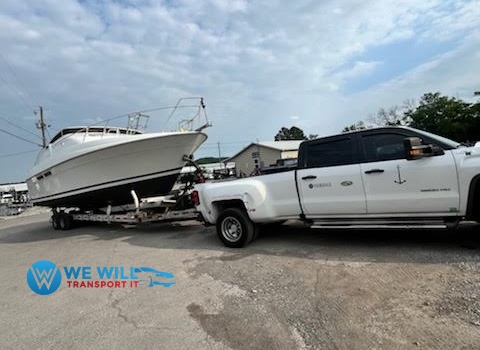
Every boat rides differently on a trailer, so our specialists match the boat with the proper trailer for the move. Understanding those differences explains why we offer boat transportation for all types of vessels rather than a one-size-fits-all service.
Jet ski shipping, for example, often pairs two or three machines on a single multi-rack trailer, which helps keep prices low. Likewise, small fishing boat shipping uses light single-axle trailers that our drivers can load.
Bass boat transport requires careful strap placement, since those low hulls and large outboards concentrate weight at the stern. Similarly, center-console boat shipping requires that the motor be trimmed, supported, and safely locked down on the trailer for transport.
Bowrider hauling for moving boats between home and storage is highest in the spring and fall. Pontoon boat hauling works differently; they have wide decks that often exceed the legal width limit and require a permit for a wide load.
Sailboat transport requires the proper preparation for every vessel. The mast comes down, gets padded, and rides secured along the deck or on a separate trailer. Keel depth matters too, since a deep fin keel needs a lowered trailer setup to be clear on every bridge along the route.
Larger cruisers have more weight. Shipping cabin cruisers means supporting the hull at its strongest points so nothing flexes over while moving on rough pavement, and shipping houseboats requires heavy multi-axle trailers under those wide, flat hulls.
Large yacht transport often requires route surveys and escort vehicles, while luxury yacht transport for overland hauling needs padded straps. No matter the type of vessel, the right equipment and specialists keep the boat safe and fully insured.
New Hampshire boat transport costs start at $2.00 to $5.00 per mile, though the exact number depends on a few factors. The New Hampshire boat hauling quote depends on the total distance, weight, beam width, and trailer requirements. Large boats may require permits and an escort vehicle, which raises the price.
Use our online boat shipping cost calculator with the boat’s dimensions for an instant estimate. Our specialists let you compare our New Hampshire boat transport costs with any boat shipping company. Call (877) 330-0051 today for the best boat transport quote.
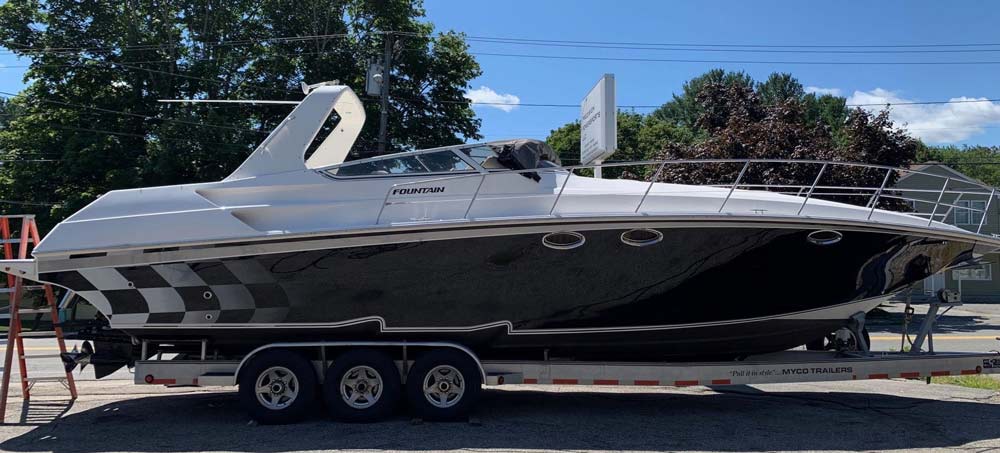
International boat shipping for vessels that need to go to Canada, Mexico, Europe, or any other country. Our overseas boat hauling solutions include roll-on/roll-off transport for trailerable boats and container service for smaller craft. Meanwhile, port-to-port solutions keep overseas boat transport affordable for owners. Anyone shipping a boat with real value should ask about international yacht transport, where specialists haul your vessel from shore to shore and send photo updates at every stop.
Preparation keeps the vessel safe while it is being moved. Remove anything loose and any electronics from the deck and cabin. Next, drain the water tanks, disconnect the batteries, and latch every hatch. Canvas and antennas come down because highway wind shreds fabric. That is essential preparation for New Hampshire boat transportation, and our specialists inform you of everything to do before pickup.
Moving a boat by road in New Hampshire takes some planning. Most boats fit on a normal trailer without any trouble. Larger boats have different requirements. New Hampshire lets trucks haul loads up to 8 feet 6 inches wide, 13 feet 6 inches tall, and 80,000 pounds without a permit. A boat that goes past any of those limits is considered an oversize load, and the state requires a permit before it can travel on public roads.
The New Hampshire Department of Transportation handles these permits. Haulers must have the paperwork in hand before the load enters the state. The application asks for basic details such as the size and weight of the boat, a description of the load, and the planned route.
Here are the main permits the state offers:
A few rules come with every permit. Oversized loads may travel only from half an hour before sunrise to half an hour after sunset, Monday through Friday. Travel stops on major holidays and during bad weather, such as snow, fog, or heavy rain. Very wide or long boats also require escort vehicles, and the largest ones may require a state police escort along with a route survey.
Lake Winnipesaukee is in the middle, and hundreds of other small lakes are located in New Hampshire, with the Atlantic coast in the southeast corner of the state. Every spring and fall, trucks and trailers haul many boats between marinas, storage yards, and launch ramps. Good route planning makes those moves go faster and more safely, since a boat on a trailer is higher and wider than most loads on the road.
These are the highways in New Hampshire for boat transport:
The cost of transporting a boat from New Hampshire can vary from $2 to $7 per mile. Several factors determine the cost, including whether the boat is on a trailer, its size, and the current price of diesel gas.
For instance, if you move a boat from Concord, NH to Fort Lauderdale, FL, shipping the boat for 1,530 miles, the cost will be around $8,950, taking three days to do the delivery.
Boat transport costs vary depending on the distance and location, typically ranging from $3 to $9 per mile. Factors such as whether the boat is on a trailer, its size, and fuel prices should be taken into consideration when calculating the total cost of transport.
The duration of the boat shipping typically ranges from three to five days, influenced by factors such as traffic, weather conditions, and the efficiency of the loading and unloading processes.
The cost of transporting a boat from New Hampshire typically ranges from $3 to $11 per mile. In addition to the size and type of boat, the price may vary.
It’s important to remember that while it’s legal to have alcohol on a boat, operating a vessel while impaired is illegal and can result in arrest for boating while intoxicated. Additionally, it’s a good idea to check with the local authorities in the area where you’ll be boating to see if there are any local laws or ordinances prohibiting alcohol in public places.
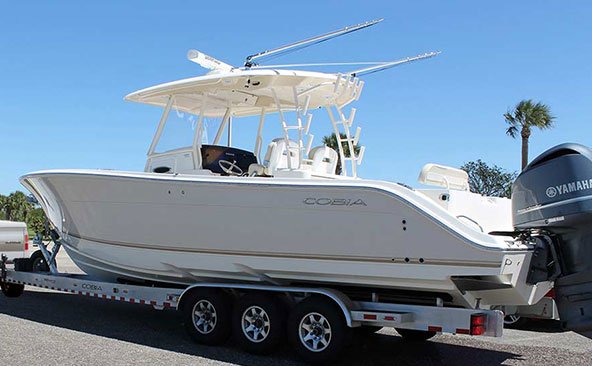
We Will Transport It hauled a boat from Wolfeboro, New Hampshire 03894, to Hawley, Pennsylvania 18428. The vessel was 27 feet long, 9 wide, and 5,700 lbs. The boat was perfect for lakes, water skiing, and enjoying time with the family. The customer originally went with another company, who kept delaying the pickup. When they called us, we had it picked up in two days. We have our own insurance and keep every customer updated throughout the entire transport.
New Hampshire is along the Atlantic coast, but don’t let the size fool you. The state packs a lot of water activity into just under 19 miles of coastline. The Division of Ports and Harbors handles and develops the state’s waterways to support commerce, freight shipments, and recreational boating. For anyone moving a boat in or out of the state, knowing which ports handle which types of traffic makes the whole process much easier.
Portsmouth Harbor stands as the only harbor of refuge for deep-draft vessels between Portland, Maine, and Gloucester, Massachusetts. That makes it a major area for boat transport up and down the New England coast. The Division of Ports and Harbors maintains jurisdiction over state-owned commercial fishing piers and facilities at Portsmouth, Rye Harbor, and Hampton Harbor.
New Hampshire also has inland waterways that boat transporters use regularly. Shippers haul vessels to spots like Hampton River Marina, Safe Harbor Wentworth by the Sea, Great Bay, the Cocheco River, Lake Winnipesaukee, Squam Lake, and Lake Sunapee.
Here are the main ports and harbor areas in New Hampshire used for boat transport:
Anyone planning to move a boat through New Hampshire should also know a few basic rules. Boat transporters follow state DOT regulations, and transport hours generally go from one-half hour after sunrise to one-half hour before sunset. Any boat over 8’6″ wide requires a state permit, and that permit needs to be obtained at least 24 hours before transport begins.
New Hampshire may be a small state, but its ports and waterways handle a wide range of boating requirements, from ocean freight to freshwater recreation.